How to Create Custom Merchandise for Your Brand
Building a Successful Custom Merchandise Collection
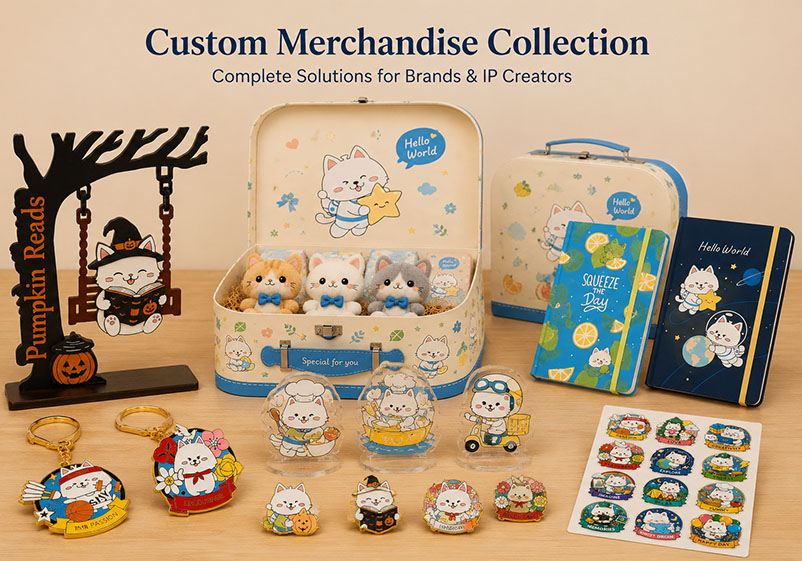
A single custom product can introduce a brand to the market, but a well-planned merchandise collection creates a deeper connection, transforming casual consumers into loyal collectors. This shift from isolated products to a cohesive merchandise ecosystem helps brands create long-term value and stronger fan engagement.
For IP owners and creators, successful merchandise is about more than printing a logo. It is about turning a digital character or brand story into physical products that fans can own, use, and display — from enamel pins and acrylic standees to premium gift sets. By creating a diverse product mix, brands can reach different audience segments: collectors looking for limited editions, fans searching for everyday accessories, and customers choosing premium gift options.
Building a successful merchandise collection requires a clear story, a strategic product mix, and a manufacturing partner experienced in multi-category production. From product development and supplier coordination to quality control and packaging, this guide explores the essential steps for turning creative ideas into market-ready IP merchandise.
Why a Merchandise Collection Is More Valuable Than a One-Off Product
A single product competes on its own merits in the market, whereas a collection competes as a complete brand world. When customers own multiple products from the same collection, they are not simply buying separate items; they are collecting different chapters of the same overarching story. For instance, an intellectual property (IP) character can appear in multiple forms:
• Collectible Enamel Pins: Attract core collectors.
• Everyday Use Keychains: Integrate into fans' daily lives.
• Desktop Acrylic Standees: Become a focal point for displaying personality.
• Affordable Sticker Sets: Provide a budget-friendly entry-level option.
• Premium Gift Box Sets: Serve as special releases or ideal gifts.
Each product plays a different role, but together they build a stronger merchandise ecosystem. Through this strategy, brands can offer diverse price points. A small sticker pack can attract new fans, a collectible enamel pin can move loyal followers, and a premium snow globe or gift box can draw collectors seeking exclusive products. Successful merchandise projects are typically designed as cohesive collections rather than isolated products, enabling brands to create multiple customer touchpoints and achieve broader market coverage.
Step 1: Build Your Collection Around a Core Story
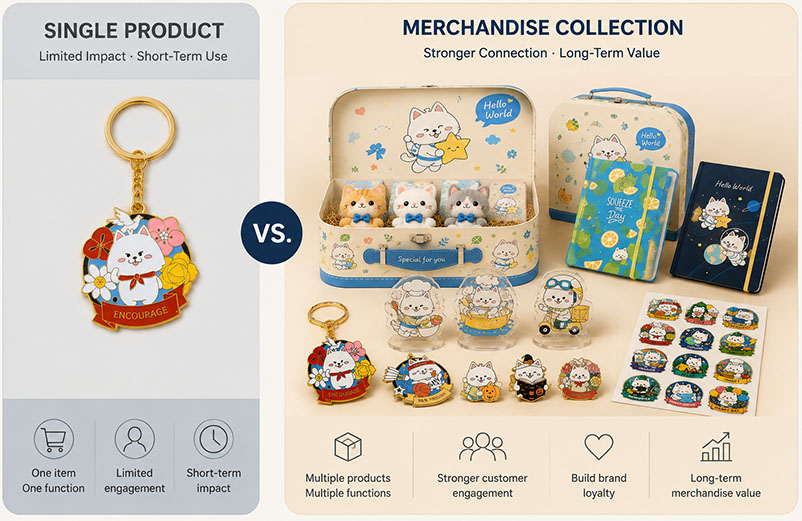
Before selecting products, brands should first define the story behind the collection. A strong merchandise collection starts with a clear concept, such as a character universe, seasonal campaign, anniversary theme, limited-edition release, or core brand message.
A clear creative direction ensures that different products feel connected. Without a unified theme, individual items may look attractive but fail to create a complete collection experience.
A successful collection usually maintains consistency through:
• Unified Character Style: Keep character designs consistent across all products.
• Coordinated Color Palette: Use a consistent color system to create visual harmony.
• Integrated Packaging Design: Ensure packaging connects all products as one collection.
• Consistent Storytelling Elements: Repeat key themes or visual elements across products.
For example, a Halloween collection may include a ghost enamel pin, pumpkin keychain, acrylic character display, and themed gift box. Each product serves a different purpose, but together they create a complete merchandise universe.
Step 2: Choose Products Based on Their Role, Not Just Popularity
One common mistake brands make is selecting products based only on popularity. A stronger approach is to define the role each product plays within the collection.
A successful merchandise collection usually combines different product roles:
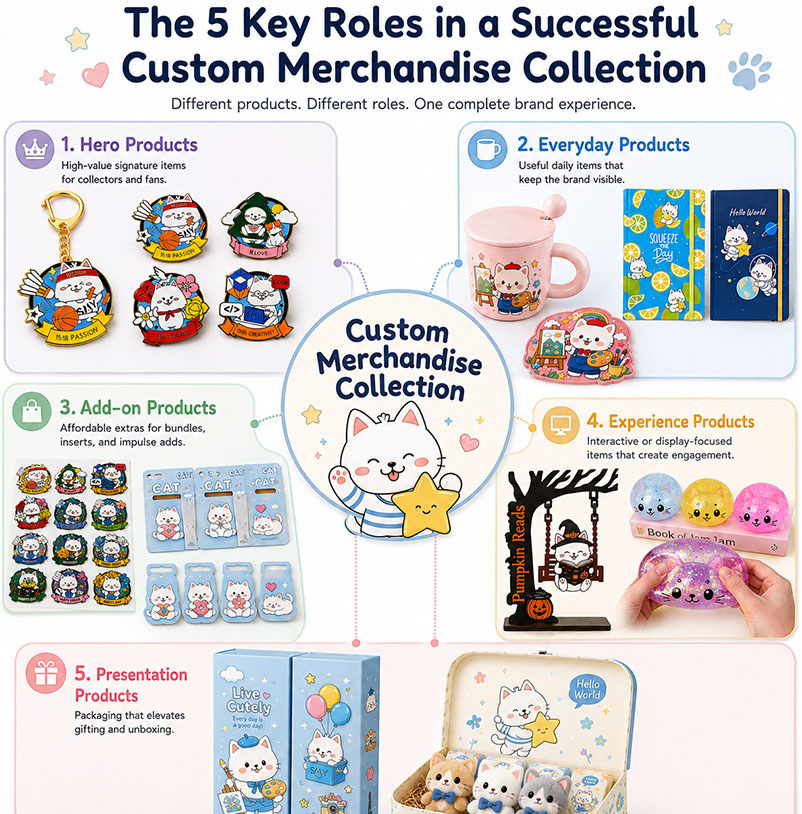
Hero Products: The Focus for Collectors
Hero products represent the strongest brand identity and highest perceived value. They are often the products fans collect, display, and share. Examples include custom enamel pins, premium metal keychains, acrylic standees, and limited-edition collectibles.
Everyday Products: Keeping Brands Visible
Everyday products extend brand exposure through daily use. Items such as keychains, mugs, lanyards, and desk accessories keep the brand present in customers' routines.
Add-On Products: Expanding Collection Accessibility
Add-on products provide affordable entry points for more customers. Stickers, bookmarks, small pins, and stationery are ideal for bundles, giveaways, and impulse purchases.
Experience Products: Creating Deeper Engagement
Experience products encourage interaction beyond appearance. Fidget toys, plush items, and interactive acrylic products help customers physically engage with the brand.
Presentation Products: Completing the Brand Experience
Packaging influences how customers perceive the entire collection. Backing cards, gift boxes, display stands, and inserts transform individual products into a complete merchandise experience.
Step 3: Plan Budget, MOQ, and Production Together
Many brands calculate the cost of each product separately when starting a merchandise collection. However, a successful collection requires a broader strategy because different products have different production requirements, costs, and quantity considerations.
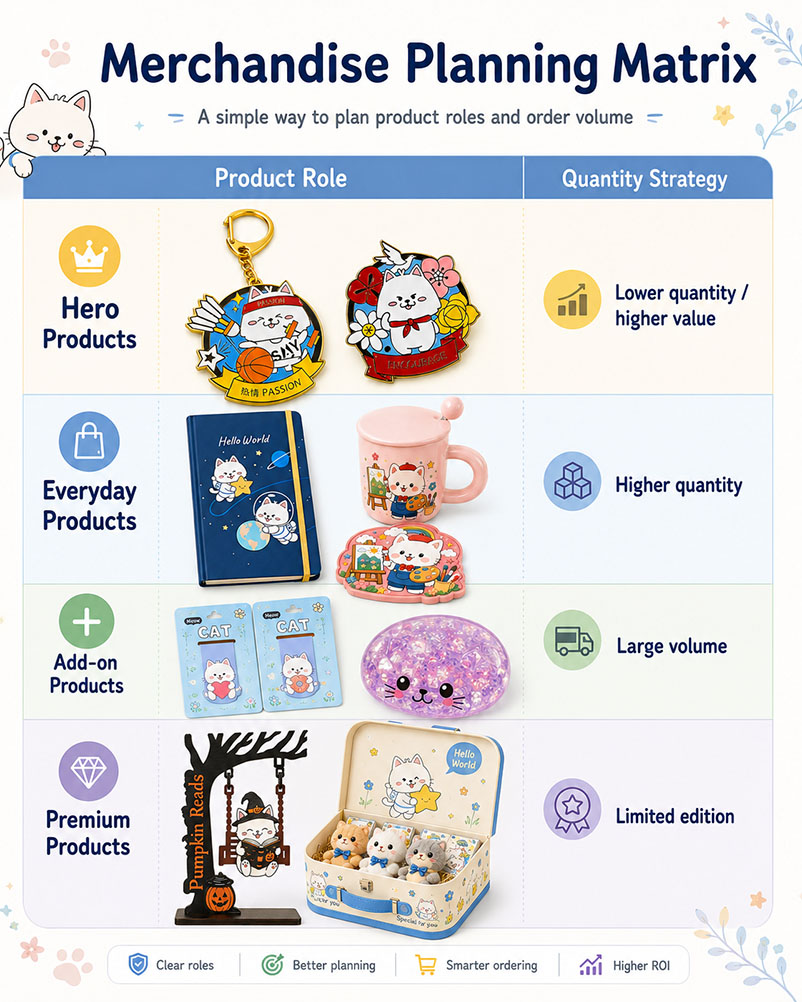
Metal products may involve tooling, acrylic products require specific printing and cutting processes, and molded products often require higher MOQs due to development costs. Therefore, brands should evaluate the collection as a whole rather than managing each product independently.
Budget and MOQ should also be planned based on each product’s role. Hero products may receive more investment because they represent the brand identity, while add-on products can be produced in larger quantities to improve accessibility. Premium or limited-edition products may require smaller batches to reduce risk and test customer response.
Working with an experienced multi-category manufacturer allows brands to balance product selection, quantity planning, tooling costs, packaging requirements, and production efficiency before moving into mass production.
Step 4: Establish a Realistic Production Timeline
Creating a complete merchandise collection requires much more coordination than producing a single product. A collection may involve different categories such as metal products, acrylic items, printed materials, packaging, and accessories, each with its own production requirements.
A reliable manufacturing partner helps coordinate these stages and ensures consistency across the entire collection.
Seasonal Product Planning
Seasonal merchandise requires early preparation. Brands need to consider concept development, artwork approval, sampling, production timelines, and shipping schedules before the launch date. Early planning reduces delays and provides enough time for adjustments before mass production.
Design Review and Sampling
Before production begins, artwork should be reviewed based on the final product specifications. Digital designs may require adjustments for enamel filling, metal cutting, acrylic printing, or packaging layouts.
The sampling stage allows brands to confirm colors, materials, structures, and finishing details across all products, ensuring visual consistency throughout the collection.
Mass Production and Quality Control
After sample approval, multi-SKU collections require careful coordination of production schedules, quality inspections, packaging, labeling, and shipping preparation.
A strong quality control system ensures that different products maintain consistent standards, from individual product details to the final packaged collection.
Case Study: Turning Seasonal IP Ideas Into Collectible Merchandise Collections
A Canada-based IP brand has been working with us on Christmas merchandise projects for several years.
Instead of creating one-time holiday products, the brand continues to expand its character collection with new seasonal designs every year.
Each Christmas season, the brand develops new metal ornaments featuring its characters in different holiday themes, such as Christmas trees, Santa Claus, and snowman designs.
Last year, the brand added a custom snow globe to its holiday collection. The snow globe featured the characters building a snowman inside the scene. The built-in snowflake effect created a realistic winter atmosphere and made the product more interactive for fans.
This project shows the value of a long-term merchandise strategy. Seasonal products are not only short-term gifts. When brands keep the same character identity while introducing new designs, fans can continue collecting new releases and staying connected with the brand.
Step 5: Determine Your Collection Release Strategy
Production planning and sales strategy should work together. Brands can choose different release approaches based on their campaign goals, inventory plans, and customer expectations.
All-at-Once Release
Launching the entire collection at the same time works well for conventions, crowdfunding campaigns, and seasonal launches. This approach creates a complete unboxing experience, but requires all products to be ready before the release date.
Phased Release
Some brands prefer releasing products gradually over time. For example, hero products can launch first, followed by everyday items and premium collectibles. This approach helps maintain customer interest and reduces production pressure.
Permanent Products + Limited Editions
A balanced strategy often combines permanent products with limited releases. Everyday items such as keychains, stickers, and accessories can support ongoing sales, while seasonal pins, anniversary products, and premium gift sets create excitement through special releases.
Common Mistakes Brands Should Avoid
• Ignoring the Collection as a Whole
A successful merchandise collection requires consistency across products, including artwork, colors, materials, and packaging. Designing each item separately can result in disconnected products rather than a unified brand experience.
• Overlooking Packaging and Presentation
Packaging is part of the product experience. A well-designed backing card, gift box, or insert can significantly improve perceived value and make products feel more collectible.
• Designing Without Manufacturing Input
Creative ideas should be reviewed with production considerations in mind. Early feedback helps avoid design issues, unnecessary costs, and production limitations.
• Managing Too Many Suppliers
Working with multiple suppliers can create challenges in quality control, color consistency, and project coordination. A manufacturer experienced in multi-category merchandise can simplify the process and improve consistency.
How to Choose the Right Custom Merchandise Manufacturer
Producing a single product is very different from managing a complete merchandise collection. When selecting a manufacturing partner, brands should look beyond price and evaluate capabilities in product development, quality control, and multi-category coordination.
Multi-Category Manufacturing Capability
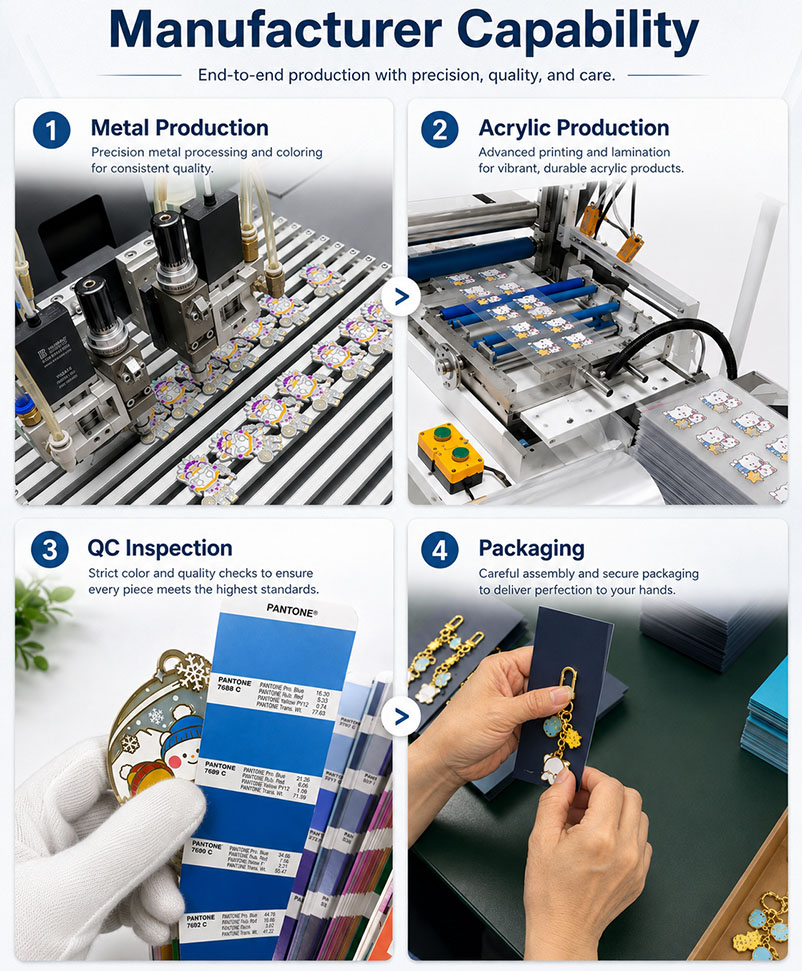
A complete merchandise collection may include metal products, acrylic items, packaging, and accessories. Working with a manufacturer experienced in multiple categories helps brands maintain consistency in quality, color, and overall design while reducing the complexity of managing multiple suppliers.
Product Development Support
The right manufacturer should provide more than production. Early feedback on materials, structures, and manufacturing methods can help improve product feasibility, avoid unnecessary modifications, and turn creative ideas into production-ready merchandise.
Quality Control Across Multiple SKUs
For multi-product collections, quality management is critical. Brands should evaluate how suppliers handle sample approval, inspections, packaging checks, and shipment preparation. A reliable manufacturer should maintain consistent standards across every SKU, not just focus on individual product pricing.
Frequently Asked Questions
How many products should a first-time merchandise collection include?
Many brands start with 3-6 products. This provides enough category diversity to feel like a true collection while keeping production management controllable.
What are the best products for a new IP brand?
Popular entry-level products include enamel pins, keychains, stickers, and acrylic standees. They are versatile, collectible, and suitable for various audience groups, making them ideal for small batch custom merchandise.
How much does it cost to create custom merchandise?
Costs vary based on product type, material, design complexity, order volume, finishing options, and packaging requirements. While basic promotional items are usually more budget-friendly, premium collectibles involving custom molds, special finishes, or customized packaging require a higher initial investment. Rather than focusing only on unit price, brands should consider a balanced product strategy that combines higher-value hero products with affordable add-on items to maximize the overall value of the collection.
What is the MOQ for custom merchandise?
MOQ depends on the product type, material, production process, and customization requirements. Products like enamel pins, metal keychains, and acrylic standees may offer more flexible quantities depending on the design and production method, while custom-molded items usually require higher MOQs to cover tooling and setup costs. For new brands, we recommend planning MOQ based on the role of each product within the collection — producing core products in larger quantities while testing limited-edition items with smaller batches.
Can one manufacturer produce different categories of merchandise?
Yes. Many brands prefer working with manufacturers capable of supporting multiple categories because it reduces communication and project management complexity and helps maintain visual consistency across the collection. When selecting a partner, inquire about their capabilities across different material types.
How long does custom merchandise production take?
The timeline depends on product type, quantity, complexity, and packaging requirements. Multi-product collections usually require more planning and coordination than single-product orders. For a first-time collection, 8 to 10 weeks from design confirmation to final delivery is a reasonable estimate, covering all stages of the IP merchandise manufacturing process.
Is custom packaging necessary?
Not all projects require premium custom packaging, but it can significantly enhance product presentation and customer experience. For brands on a budget, prioritizing custom packaging for hero products is a smart strategy.
Build Your Exclusive Merchandise Collection Today
Creating a successful merchandise collection requires more than producing individual products. It requires a clear brand vision, the right product mix, and a manufacturing partner who understands how to bring creative ideas into reality.
From enamel pins and keychains to acrylic displays, premium gifts, and complete seasonal collections, the right partner can help brands manage product development, production, quality control, and packaging coordination from concept to delivery.
Ready to turn your brand ideas into a complete merchandise collection? Contact us to discuss your next project.