How to Choose the Right Acrylic Merchandise for Your IP Brand
Acrylic merchandise has become one of the fastest-growing product categories for IP brands, from anime studios and game publishers to independent artists building their own merch lines. But once a brand decides to go with acrylic, a new question comes up almost immediately: which format actually fits the character, the budget, and the audience?
Standee, keychain, charm, display — each looks similar on the surface, but they serve very different purposes in a merchandise lineup. This guide breaks down why acrylic works so well for IP merchandise, how to choose between the main product formats, what happens behind the scenes in production, and the mistakes that most often derail a project before it reaches fans.
1. Why Acrylic Has Become Popular in IP Merchandise
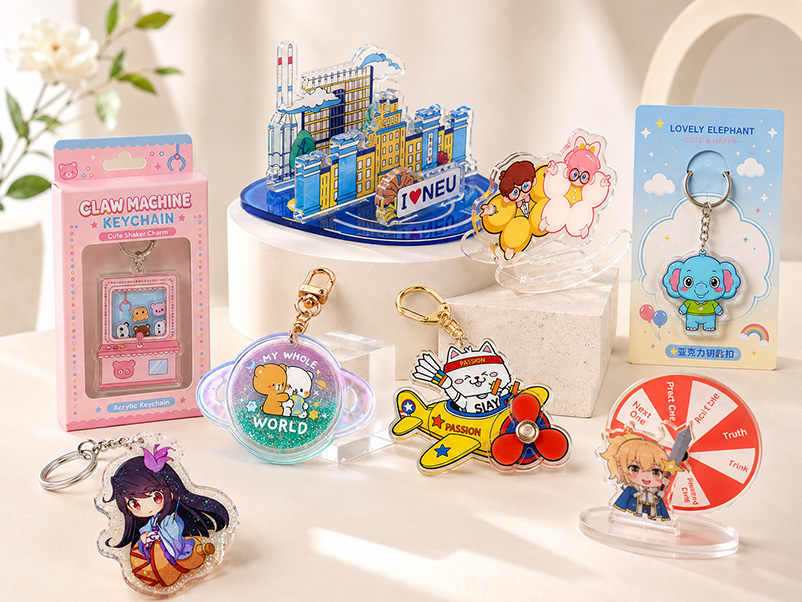
Acrylic has become a popular choice for IP merchandise because it combines strong visual performance with flexible product possibilities. Its transparency, vibrant colors, and ability to reproduce detailed artwork make it especially suitable for character-based products.
1.1 Strong Visual Performance
For IP brands, visual accuracy is one of the most important factors when turning artwork into physical merchandise. Acrylic helps preserve character details through clear printing, bright colors, and clean visual effects.
This makes it widely used for anime and manga IP, game characters, mascots, and independent artist merchandise, where fans expect products to closely represent the original artwork.
1.2 Flexible Product Formats
Another advantage of acrylic is that the same character artwork can be adapted into different merchandise formats, each serving a different purpose within a collection.
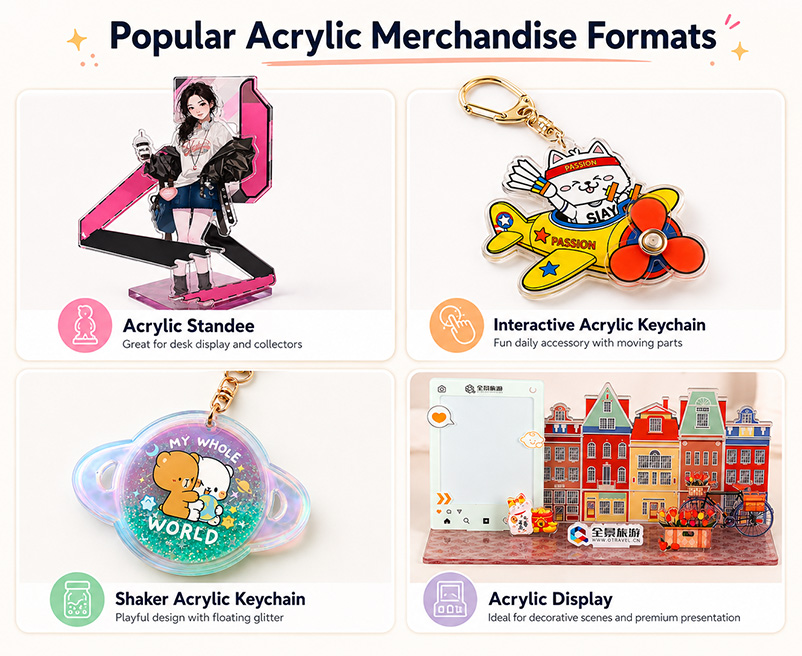
Acrylic keychains are popular as affordable fan merchandise for everyday use, while acrylic standees provide a larger display format for collectors. Acrylic charms offer a lightweight accessory option, and premium acrylic displays can create a stronger collectible experience through larger sizes or layered structures.
This flexibility allows brands to develop different product levels, from accessible fan items to premium collectibles, while maintaining a consistent character identity across the entire merchandise collection.
2. Acrylic Standee vs Acrylic Keychain vs Acrylic Charm vs Acrylic Display: How to Choose?
Selecting the right format is less about which product looks best and more about what role it needs to play in your merchandise lineup. Here's a comparison to guide the decision:
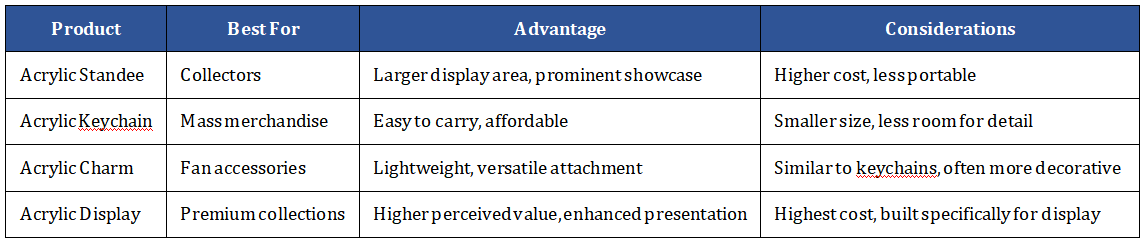
In general, keychains work best for affordable fan merchandise, standees for display-focused collectors, charms for daily accessories, and acrylic displays for premium collections. Most successful IP merchandise lines combine multiple formats to serve different price points and levels of fan engagement within the same collection.
3. How Artwork Should Be Prepared for Acrylic Products
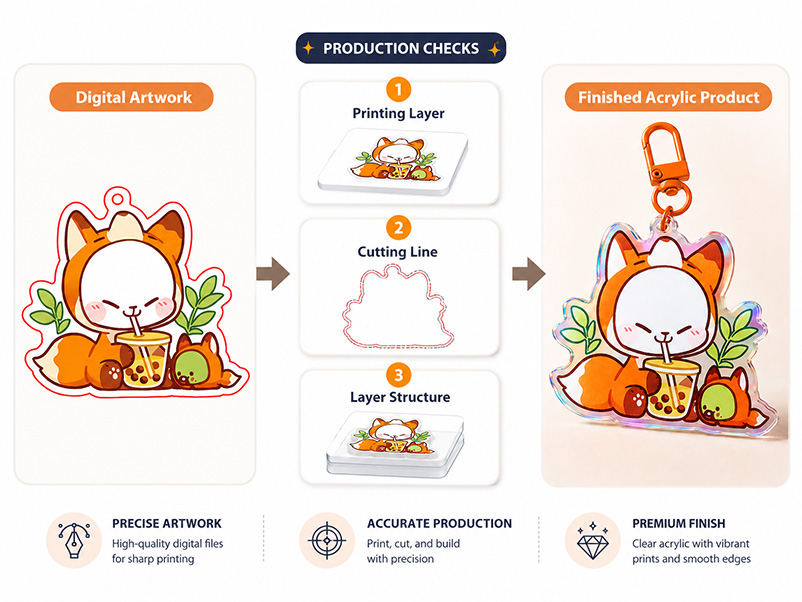
Transforming digital artwork into a physical acrylic product isn't as simple as sending a finished file to production. Acrylic has specific printing and cutting requirements, and understanding them early is the difference between a smooth sampling process and multiple costly revisions — this is the same principle we cover in more depth in our guide on From Artwork to Finished Product (internal link).
Printing Layer
Acrylic printing requires different considerations from standard printing because the material is transparent. Most designs need a white ink base layer to maintain color brightness and prevent the artwork from appearing faded or translucent.
If certain areas are intended to remain transparent, such as light effects, backgrounds, or character details, they should be clearly marked in the artwork file before production.
Cutting Line
The cutting line defines the final shape of the acrylic product. A clean vector outline is important to ensure accurate laser cutting and maintain the character’s original silhouette.
Small or fragile details should also be considered carefully, as overly complex shapes may affect production stability and product durability.
Layer Design
For products that require more depth, artwork can be separated into multiple acrylic layers. A 2-layer structure can create a simple 3D effect, while additional layers can be used for special effects such as glow or holographic elements.
Planning the layer structure early helps avoid design changes during sampling and improves the final product result.
4. Customization Options That Make Acrylic Merchandise Stand Out
Acrylic already offers strong visual performance through clear printing, vibrant colors, and flexible designs. Additional customization options can help brands create more unique products and increase the collectible value of their merchandise.
However, not every effect fits every product. The best choice depends on the product purpose, character style, and target audience.
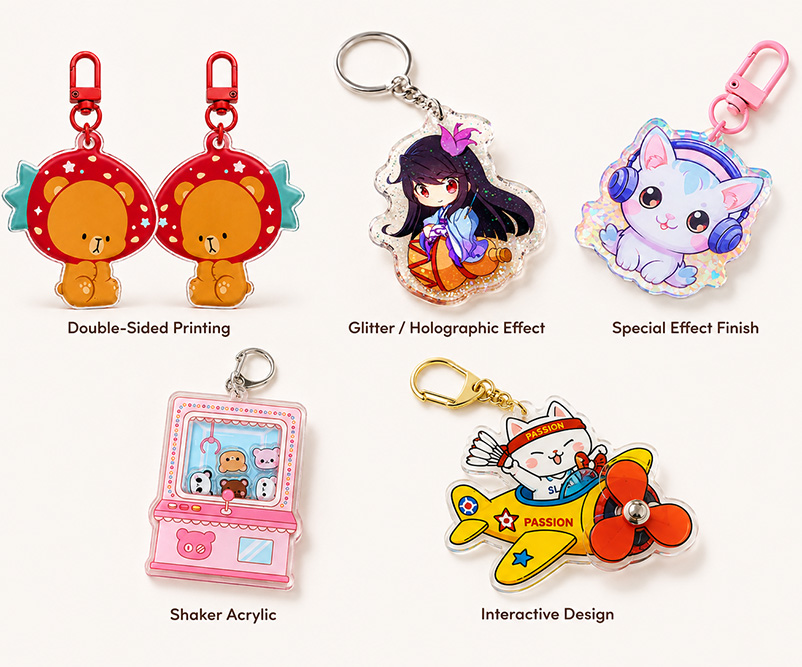
Double-Sided Printing
Double-sided printing is commonly used for acrylic keychains and charms where both sides are visible during daily use. Brands can use different artwork, character poses, or additional details on each side to create a more complete product experience.
Epoxy Dome
Epoxy dome adds a clear raised layer over the printed surface, creating a glossy finish and a stronger 3D feeling. It works well for acrylic keychains, charms, and small collectible products where brands want a more premium appearance.
Holographic and Iridescent Effects
Holographic and iridescent effects create changing colors when the product is viewed from different angles. They are popular for limited editions, collector items, and special releases, especially when the visual effect matches the character style.
Shaker Acrylic
Shaker acrylic uses multiple acrylic layers with moving elements such as glitter, beads, or mini charms inside. Compared with standard acrylic products, shaker designs create more interaction and are often used for premium fan merchandise.
Layered Acrylic
Layered acrylic separates different design elements into multiple layers, creating more depth and a display-like appearance. This technique works especially well for acrylic standees and premium display products that need stronger visual impact.
Choosing the right effect is not about adding as many features as possible. The best acrylic merchandise uses customization options that support the character, product purpose, and overall brand experience.
5. Acrylic Merchandise Production Process: From Artwork to Finished Products
Creating acrylic merchandise involves more than simply printing an image onto acrylic. The artwork, material selection, production method, and product structure all need to work together to achieve a successful final product.
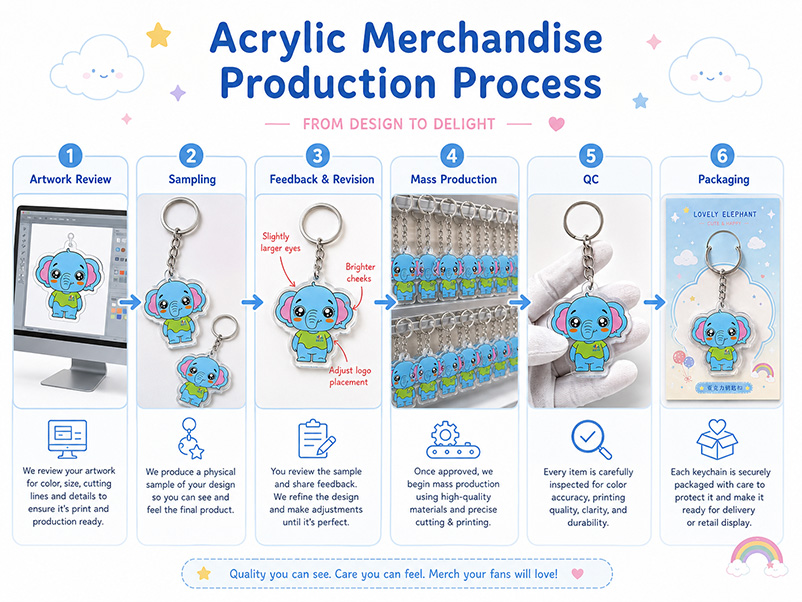
Before production begins, manufacturers review artwork, printing requirements, cutting lines, and layer structures to ensure the design can be produced accurately.
Sampling: Improving the Product Before Mass Production
Sampling is an important stage in acrylic merchandise development because it allows brands to review the actual product and make improvements before large-scale production.
During sampling, brands can evaluate key details such as print quality, color accuracy, acrylic thickness, cutting precision, and the overall appearance of the finished product.
A typical sampling process includes:
Artwork Review → First Sample → Feedback → Revision → Final Approval
Sampling is not only a confirmation step. It is also an opportunity to identify potential issues and improve the final product before mass production begins.
Sampling time depends on product complexity. Simple acrylic keychains usually require around 3-7 business days, while standard acrylic standees may take around 5-10 business days. More complex products, such as shaker acrylic or layered acrylic designs, often require around 10-15 business days due to additional layers, assembly, and structural testing.
Production Timeline and MOQ Considerations
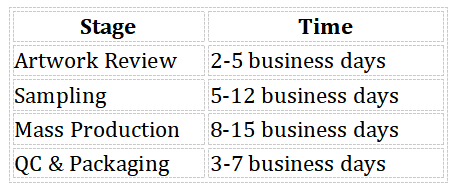
After sample approval, the project moves into mass production. The overall timeline depends on the product type, order quantity, design complexity, and packaging requirements.
A typical acrylic merchandise production timeline includes:
MOQ is another important consideration when planning acrylic merchandise projects. The required quantity depends on the product structure, production method, and assembly requirements.
Standard acrylic products, such as keychains and simple standees, are often suitable for smaller trial orders. More complex products, including shaker acrylic items and multi-layer displays, may require higher quantities because they involve additional components and production steps.
For many standard acrylic products, brands may start with trial quantities from around 100-500 pieces. Starting with a smaller production run allows new IP brands to evaluate customer response before expanding successful designs into larger merchandise collections.
For collector-focused acrylic products, packaging is also part of the product experience. Custom backing cards, protective sleeves, and gift packaging can enhance presentation and increase the perceived value of the final product.
6. Common Mistakes When Developing Acrylic Merchandise
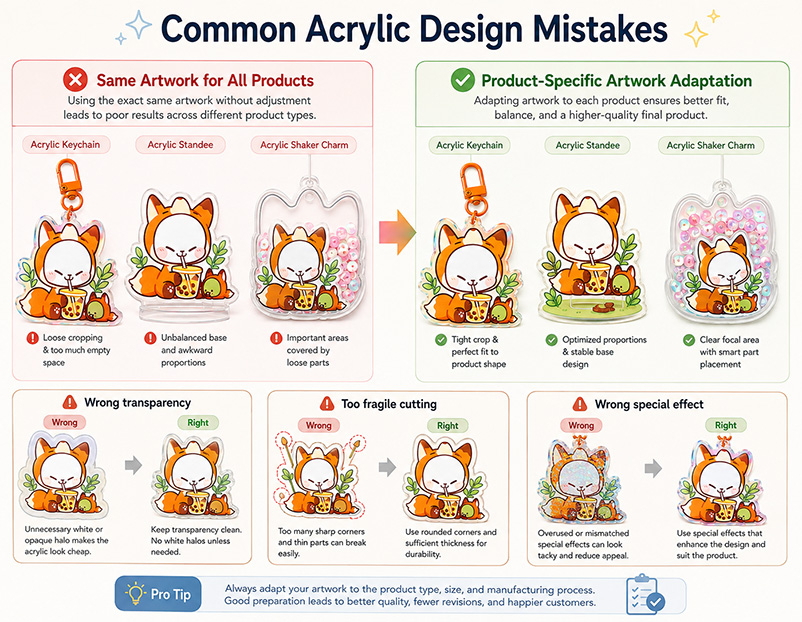
Mistake 1: Using One Artwork File for Every Product
It's a common misconception that a single artwork file can be applied universally across all acrylic product types. Artwork optimized for a standee — larger and stationary — will usually need adjustment for a keychain, which is smaller and subject to more daily wear. Different products often call for different resolutions, detail levels, or small design modifications to preserve visual integrity and durability.
Mistake 2: Ignoring White Ink and Transparency
Many brands developing acrylic merchandise for the first time don't realize acrylic printing isn't the same as standard printing. Printing directly onto clear acrylic without a white ink base can leave colors looking translucent and faded rather than vibrant.
Mistake 3: Overcomplicated Cutting Shapes
Laser cutting offers real precision, but overly intricate or delicate shapes create problems: they become fragile, drive up cost through longer production time and material waste, and make assembly more difficult for multi-part items.
Mistake 4: Choosing Effects Without Considering Product Purpose
Holographic finishes and other special effects look striking, but they aren't automatically right for every IP or every product. A subtle, elegant character design might be overwhelmed by a flashy holographic effect, while a bold, dynamic IP could benefit from it. The brand's aesthetic, the product's intended use, and the target audience should all factor into the decision — not visual appeal alone.
7. Case Study: Developing Acrylic Shaker Products for an IP Brand
Client Need: A North American IP brand wanted to develop shaker acrylic products as part of a broader character merchandise collection. The shaker piece was planned as the flagship item, launching alongside matching standees and keychains built from the same character artwork, for an initial combined order of around 2,000 units across the three products.
Challenge: The shaker design used three internal layers with loose glitter and mini star charms enclosed between them, which made sealing the layers without leakage or clouding far more difficult than a standard flat acrylic piece. Because the standee and keychain were being produced from the same character illustration, color and finish also had to stay consistent across all three formats — not just within the shaker product itself.
Solution: The team worked closely with the brand through each stage of development:
• Artwork Adjustment — the artwork was adapted specifically for the multi-layered shaker structure, making sure every visual component still aligned once assembled, while the standee and keychain versions were adjusted separately for their own scale and detail level.
• Sample Review — three rounds of samples were produced and reviewed before the shaker mechanism, color accuracy, and overall feel were signed off for mass production.
• Assembly QC — quality control during assembly focused on checking the shaker seal on every unit and spot-checking color consistency across the standee, keychain, and shaker batches.
Result: The brand launched the shaker acrylic alongside its matching standee and keychain as a coordinated set, giving fans a tiered lineup from everyday accessories to a premium collectible built around the same character artwork.
Key Takeaways
• Acrylic's strength for IP merchandise comes from its visual clarity and its flexibility across product formats.
• Choosing between standee, keychain, charm, and display comes down to purpose: display vs. carry, mass-market vs. premium.
• Artwork preparation is not the same as artwork design — printing layers, cutting lines, and layer separation all need dedicated planning.
• Customization options like shaker, epoxy dome, and holographic effects should be chosen based on the product's role, not just visual appeal.
• Sampling and timeline planning early in the process help avoid delays once mass production begins.
FAQ
What is the difference between acrylic standees and acrylic keychains?
Acrylic standees are typically larger, designed for display on flat surfaces, and function as collectible items. Acrylic keychains are smaller, designed for portability, and attach to keys, bags, or other personal items as affordable fan merchandise.
Is acrylic good for collectible merchandise?
Yes. Acrylic is widely used for collectible merchandise because it supports detailed artwork, vibrant colors, and premium effects such as holographic finishes and layered designs.
How much does custom acrylic merchandise cost?
Cost depends on product size, acrylic thickness, printing method, special effects, and order quantity. Simple acrylic keychains usually cost less than multi-layer or shaker products because complex structures require additional materials and assembly.
How long does it take to develop custom acrylic merchandise?
Development time depends on product complexity. Most acrylic merchandise projects take around 4-10 weeks from artwork approval to delivery, including sampling and mass production.
How long does acrylic product sampling take?
It depends on product complexity. Simple keychains typically take around 3-7 business days, standard standees around 5-10 business days, and shaker or layered products around 10-15 business days.
Can acrylic products use double-sided printing?
Yes. Double-sided printing is commonly used for acrylic keychains and charms to create a more complete design experience.
What file format is needed for acrylic products?
Vector files such as AI, EPS, or PDF are preferred because they allow manufacturers to clearly separate printing layers and cutting lines during production.
What MOQ is common for custom acrylic products?
MOQ depends on product type and complexity. Many standard acrylic products can start from around 100-500 pieces, while shaker and multi-layer products may require higher quantities due to additional assembly requirements.
Have a Character Design or Acrylic Merchandise Idea?
Share your character artwork or merchandise idea with our team. We can help you choose the right acrylic format, review production options, and develop merchandise that stays true to your original character design.