How to Choose an IP Merchandise Manufacturer | Complete Guide for Brands
How to Choose an IP Merchandise Manufacturer:
A Complete Guide for Brands
For IP owners, character brands, artists, and merchandise teams, intellectual property represents more than artwork. It represents a story, a community, and the connection between a brand and its fans.
Turning a character from a digital design into physical merchandise requires more than production capability. Brands need a manufacturing partner who understands character identity, supports product development, and maintains quality across every product.
An experienced IP merchandise manufacturer helps brands turn creative ideas into physical products. From enamel pins and metal keychains to acrylic standees and seasonal collections, the right partner ensures products maintain quality, character identity, and fan appeal.
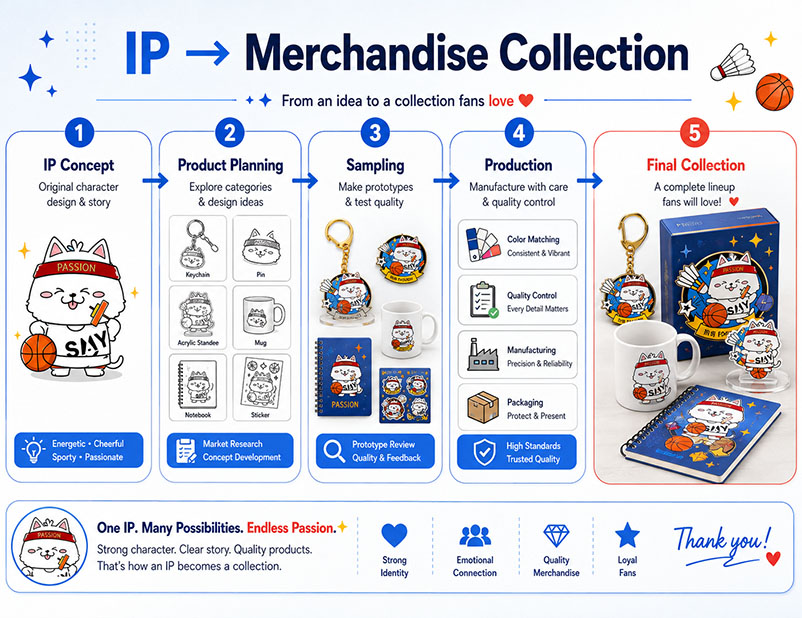
Your IP Needs More Than a Manufacturer
Many manufacturers can produce physical products, but IP merchandise requires a deeper understanding of character identity and fan expectations.
For character brands, customers are not simply buying a keychain, pin, or acrylic standee. They are buying a connection with the character and the story behind it. Even small differences in expression, color, or proportions can affect how fans perceive the final product.
A reliable IP merchandise manufacturer helps brands adapt characters across different products while preserving their original identity. Whether produced as pins, keychains, acrylic standees, or gift items, each product should maintain the same character style and brand recognition.
The goal is not only to reproduce artwork, but to create merchandise that fans recognize, trust, and want to collect.
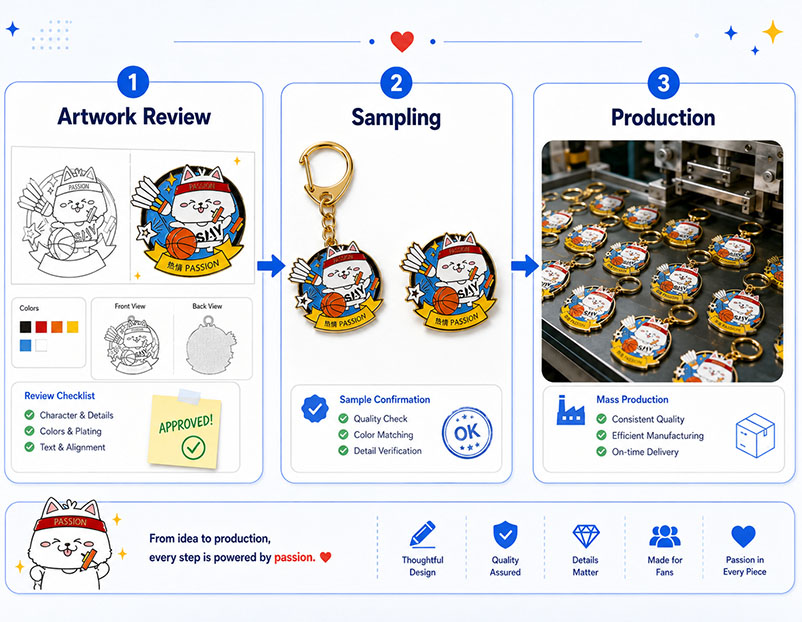
From Artwork to Production: Why Product Development Matters
One of the biggest challenges in IP merchandise production is turning digital artwork into physical products.
A character design that looks perfect on screen may require adjustments before production. Small details, thin lines, and complex colors can behave differently depending on the material and manufacturing process.
A reliable IP merchandise manufacturer helps brands solve these challenges through artwork review, production feedback, and sampling. The goal is not only to check the final appearance, but also to improve the design before mass production begins.
For example, an enamel pin may require line adjustments, while an acrylic standee may need changes to layers or structure. Early product development helps prevent costly production issues and ensures the final merchandise stays true to the original IP.
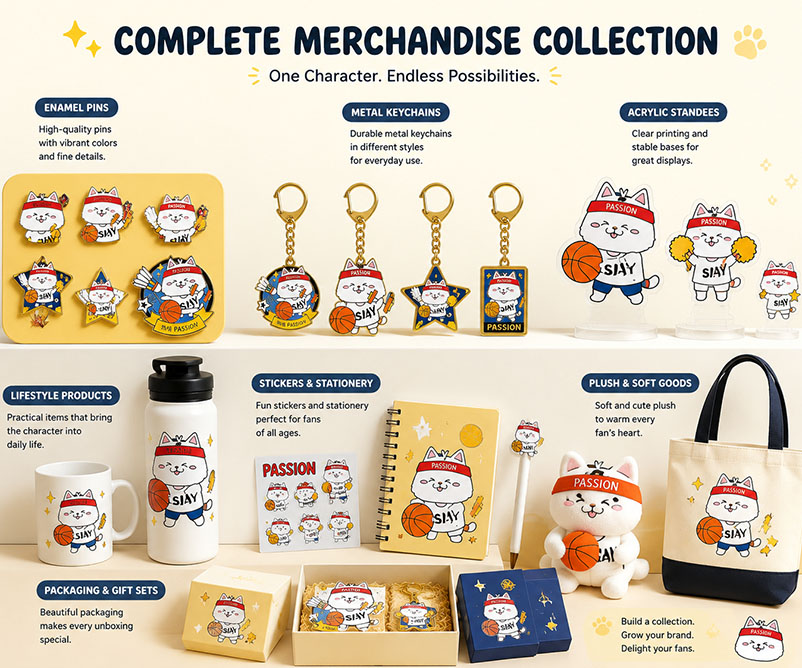
Why Multi-Category Experience Matters for IP Merchandise
Most successful IP brands do not rely on a single product. Instead, they build merchandise collections that allow fans to connect with the brand in different ways.
A strong merchandise collection usually includes different product types, such as enamel pins, metal keychains, acrylic standees, lifestyle products, and gift sets. Each product has a different role, but they should all maintain the same character style and brand identity.
This requires a manufacturing partner who understands different materials, production methods, and the relationship between products within a collection. The challenge is not only producing different items, but ensuring that every product maintains consistent colors, character details, packaging style, and overall brand identity.
A reliable IP merchandise manufacturer helps brands create collections that feel complete rather than a group of unrelated products.
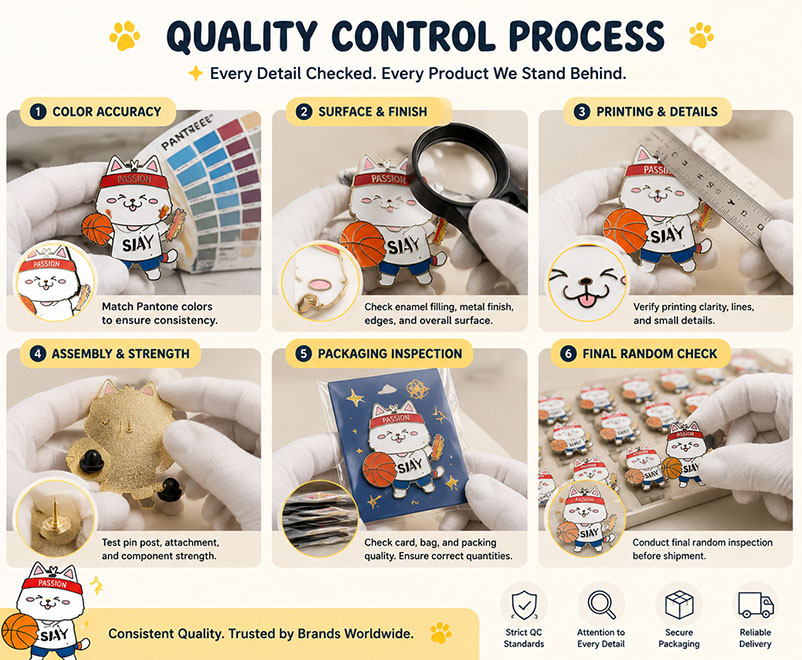
Quality Control Protects the Fan Experience
Quality control is important for every product, but IP merchandise requires a higher standard because fans care about more than function. They expect products that accurately represent the characters they love.
A small difference in color, printing, finishing, or character details can affect how fans perceive the final product. This is why quality control should focus on the entire collection, not only individual items.
When the same character appears on a metal keychain, enamel pin, and acrylic standee, every product should maintain the same visual identity. A professional manufacturer should ensure consistency from prototype approval to final packaging, including character details, color accuracy, finishing quality, and overall presentation.
A successful merchandise collection is not defined by one perfect product. It is defined by whether every product delivers the same brand experience.
Protecting Your IP Throughout the Production Process
For IP owners, protecting creative assets is a key consideration when choosing a manufacturing partner.
During the development process, brands often need to share artwork files, unreleased character designs, and product concepts. A reliable IP merchandise manufacturer should have clear confidentiality practices to protect these assets and ensure designs are only used for approved production.
This is especially important for limited-edition releases and seasonal collections, where a product leak before launch can affect marketing plans and customer expectations.
IP protection is not only about agreements. It is about working with a partner who respects the value of your creative work.
Communication and Project Management Can Determine Project Success
Many merchandise challenges are not caused by manufacturing limitations. They often come from unclear communication and misaligned expectations.
For international brands working with overseas manufacturers, every stage of the project requires clear communication. Keeping artwork, samples, production details, and delivery plans aligned helps prevent misunderstandings and delays.
A reliable manufacturing partner should do more than follow instructions. They should identify potential issues early and provide practical solutions.
The best manufacturing relationships are built on collaboration. A strong partner becomes an extension of the brand team, helping connect creative ideas with practical production solutions.
Understanding MOQ for Custom Merchandise
MOQ is one of the most common concerns for brands developing custom merchandise. However, MOQ is not only a production requirement. It is also a planning decision that affects investment, inventory, and the overall merchandise strategy.
Different products may require different quantity approaches. New IP brands often start with smaller production runs to test customer response, while growing brands may increase quantities once certain products prove successful. Established brands usually need more structured planning for seasonal releases and larger merchandise collections.
For example, many brands start with a smaller trial order for a new product. A custom metal keychain design may begin with around 1,000 pieces to test product quality and customer feedback.
Once the product proves successful, brands can increase quantities and develop additional designs for a larger merchandise collection.
A good manufacturing partner helps brands move from testing new ideas to scaling successful products.
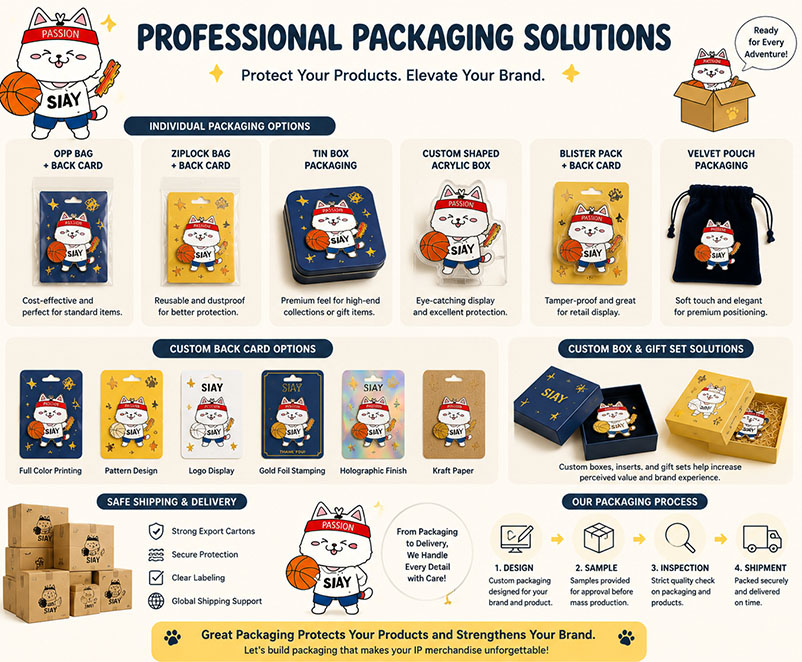
Packaging and the Unboxing Experience in IP Merchandise
For IP merchandise, packaging is more than protection during transportation. It is part of the overall fan experience.
Collectors often evaluate the value of a product before opening it. Well-designed packaging can make merchandise feel more premium while strengthening the connection between the product and the character world.
For example, an enamel pin can become more collectible when paired with a custom backing card, while a gift set becomes more memorable when the products and packaging share the same visual theme. Good packaging helps communicate the collection identity, character story, and limited-edition value.
For premium merchandise, the unboxing experience is not separate from the product. It is part of the product itself.
Case Study: Developing a Seasonal IP Merchandise Collection
A Canada-based IP brand has been working with us on seasonal Christmas merchandise for several years.
Each year, the brand creates new holiday products featuring its characters. The goal is to introduce fresh designs while keeping the characters familiar to fans.
The collection includes custom metal ornaments with Christmas themes, including characters with Christmas trees, Santa Claus, and snowman designs.
Last year, the brand added a custom snow globe to the collection. The product featured the characters building a snowman inside the globe, with a snowflake effect that created a realistic winter scene.
This project shows the value of long-term merchandise planning. By creating new seasonal products each year, the brand gives fans new items to discover while keeping the same character style across the collection.
Case Study: Scaling Custom Metal Keychains for VIP Customer Gifts
As a custom metal keychain manufacturer, we helped a North American brand develop custom metal keychains for its VIP customer gifting program.
The project started with two initial designs, with 1,000 pieces produced for each design. The goal was to test the product quality, finishing details, and customer response before expanding the collection.
During development, we focused on design accuracy, surface finishing, production consistency, and delivery schedule to ensure the final keychains matched the brand’s expectations.
After reviewing the samples and receiving positive feedback, the brand expanded the project with five additional keychain designs. Each new design was produced at 5,000 pieces.
This project demonstrates how a reliable manufacturing partner can support brands from initial product testing to larger-scale production. By maintaining consistent quality and communication, brands can confidently expand successful merchandise ideas.
FAQ
What makes a good IP merchandise manufacturer?
A good IP merchandise manufacturer should understand character identity, support product development, maintain consistent quality, and have experience producing collectible merchandise across multiple categories.
How long does IP merchandise sampling take?
Sampling time depends on product complexity and production requirements. Simple products may require only a few days, while complex structures or multi-material products may require additional development time.
A professional manufacturer should use the sample stage to confirm product appearance, materials, and production feasibility before mass production.
What is the MOQ for custom metal keychains?
MOQ depends on the design structure, material, finishing options, and production requirements. Simple designs may support lower quantities, while custom molds or complex structures usually require higher production volumes.
Many brands begin with smaller trial orders and increase quantities after confirming market response.
What is the MOQ for enamel pins?
The MOQ for enamel pins depends on size, design complexity, plating options, and packaging requirements. Brands launching new collections often start with test quantities before expanding successful designs.
How much does custom merchandise production cost?
The cost depends on product type, materials, design complexity, quantity, finishing options, and packaging requirements.
A reliable manufacturing partner can help brands select the right product combination based on budget, audience, and merchandise goals.
Choose a Manufacturing Partner That Helps Your IP Grow
Choosing an IP merchandise manufacturer is not only about finding a supplier who can produce products.
It is about finding a partner who understands your characters, supports the development process, and helps turn creative ideas into merchandise that fans appreciate.
The right partner can help brands move from a single product idea to a complete merchandise collection with consistent quality and a clear brand identity.
Whether you are launching your first character product or expanding an existing collection, our team can support artwork review, sampling, production, quality control, and packaging development.
Contact us to discuss your next IP merchandise project and explore how we can help bring your ideas to life.