Custom Enamel Pins for Brands | Types, Design, Uses & Collectible Strategy
1. Introduction to Custom Merchandise
Custom enamel pins are small metal products, but in branding and IP merchandising they can have a much bigger impact than their size suggests.
For many brands, IP creators, artists, and event teams, custom enamel pins are not just accessories. They are small collectible products that help people express identity, connect with stories, and remember brands or characters.
Custom enamel pins are widely used in IP merchandise systems, fandom communities, retail collections, and event campaigns. They are flexible, easy to customize, and well suited for series-based designs.
Unlike keychains and other functional products, enamel pins are not mainly used for daily use. They are more emotional in nature. People wear them, save them, display them, trade them, and often collect them as part of a larger series.
To understand why custom enamel pin work so well for brands, we need to look at both how they are used and how they are structured.
2. What Is an Enamel Pin?
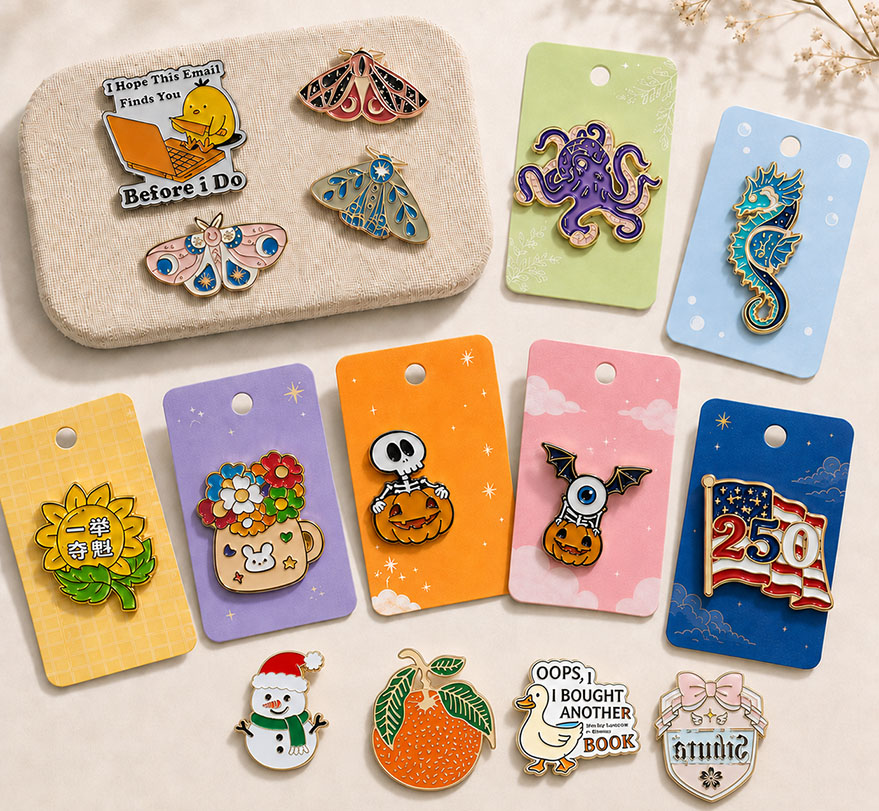
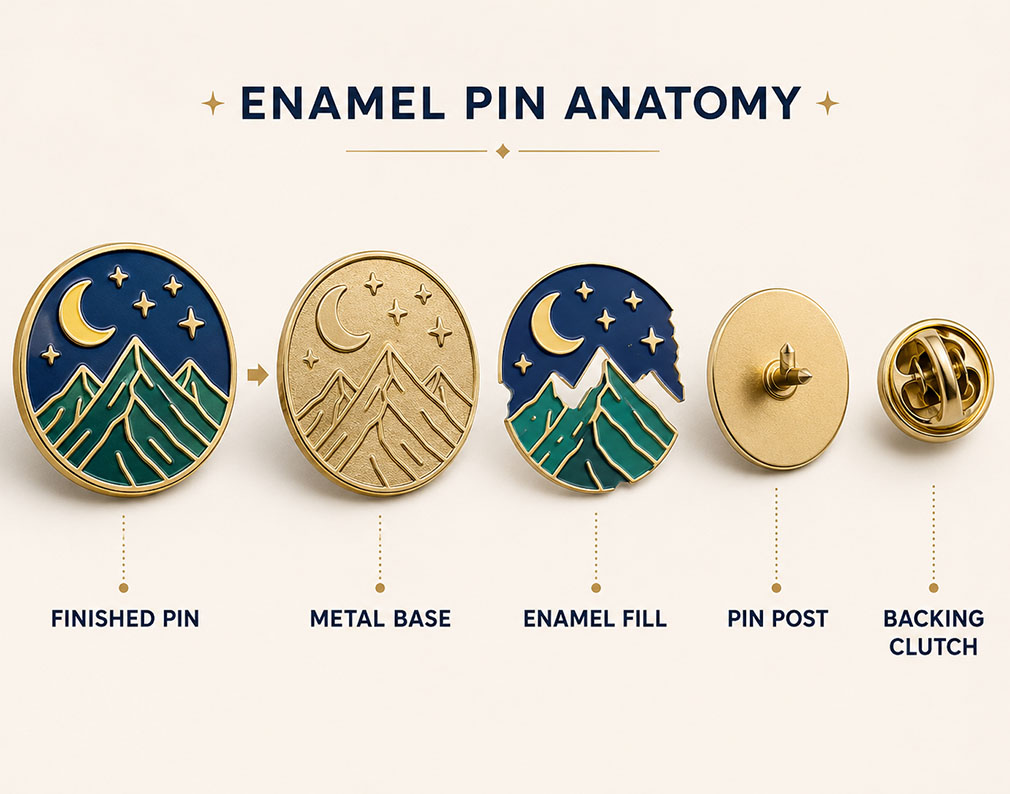
We produce enamel pins using a stamping process and then fill the recessed areas with colored enamel. Designs can include logos, characters, mascots, slogans, event themes, or original illustrations.
Although simple in appearance, enamel pins sit at the intersection of design and manufacturing. This means that small visual decisions can directly affect production outcomes.
For example, a digital illustration may look clean on screen, but when translated into metal lines and enamel compartments, certain details may need to be simplified to ensure stability in production. Small text, very thin lines, and tightly packed color areas often need adjustment before sampling.
This is why enamel pins should always be considered from both design and manufacturing perspectives, especially in retail collections and IP merchandise systems.
3. Why Brands Use Enamel Pin
3.1 Identity Expression
Enamel pins allow people to express identity in a subtle but visible way. A single enamel pin can represent a character, a brand, a fandom, or even a personal interest. Because pins are small and easy to wear, they function as lightweight identity markers in everyday environments.
This is especially useful for IP brands and creators because fans often want physical products that help them show which character, story, or community they connect with. A pin is simple enough to wear daily, but meaningful enough to become part of a personal collection.
3.2 Series-Based Design and Collecting Behavior
In most IP and merchandise projects, enamel pins are rarely designed as standalone products. Brands usually build series-based systems because visual worlds and character universes are easier to expand through multiple connected designs rather than isolated items.
For example, in a typical IP with a small character universe, each character is usually assigned one enamel pin. Instead of combining all characters into a single complex composition, they are separated into individual pieces, each representing a different personality, role, or visual identity.
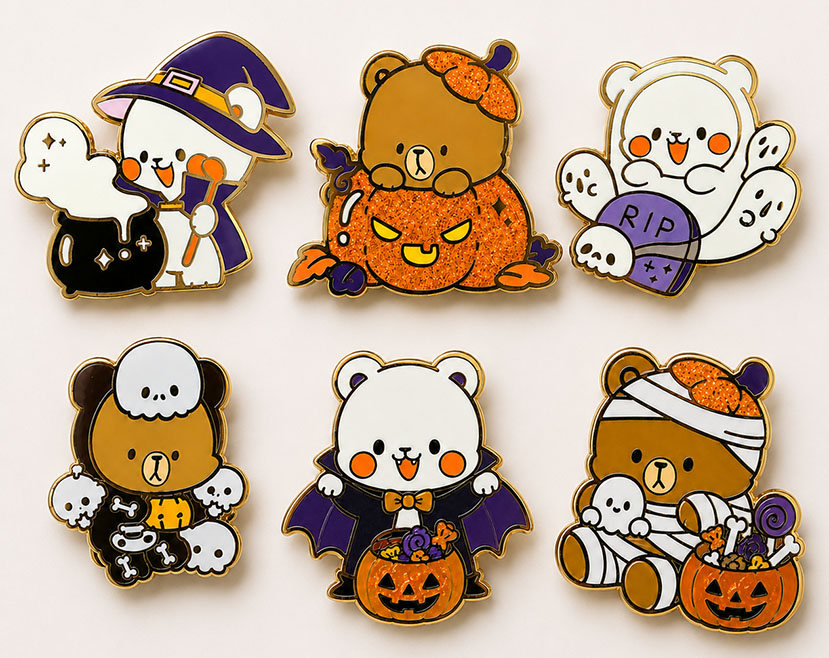
In practice, this approach is often used in real merchandising projects. We worked with a Canadian brand on a Halloween enamel pin collection. The client developed a series of 6 different design Halloween enamel pins, each representing a different Halloween character and visual concept.
Instead of merging all elements into a single product, each design was created as an individual collectible within the same theme. To enhance seasonal storytelling, the pins featured a glow-in-the-dark effect. This improved visibility in low-light settings and made the Halloween theme more noticeable in retail displays.
Each pin was individually packaged instead of being grouped into a single set. This allowed every design to function both as a standalone retail item and as part of a complete collection system.
From a production perspective, this project combined three key elements:
• series-based IP structure, with 6 variations under one Halloween theme
• special material effect, using glow in the dark enamel pin to strengthen the seasonal concept
• retail-ready individual packaging for each design
This structure is common in seasonal merchandise projects where brands need to balance collectibility and retail flexibility. Each piece can be sold or gifted individually, while the full group still encourages collection over time.
3.3 Limited Editions and Production Reality
Limited enamel pin releases are often influenced by production structure as much as marketing strategy. Because enamel pins are manufactured in batches, they naturally fit seasonal campaigns, event-based releases, and IP chapter drops.
For brands, this makes limited edition releases practical from a production perspective and useful from a marketing perspective. A limited run can create urgency, but it also keeps the project manageable when testing a new design, theme, or character series.
3.4 Event and Community Usage
In event environments, enamel pins are often used as staff identifiers, VIP markers, membership symbols, or commemorative items. Unlike paper badges or temporary event materials, custom enamel pins remain wearable and meaningful after the event ends.
This gives the product a longer life than many event giveaways. A pin can continue to appear on a bag, jacket, display board, or collection book long after the campaign or event has finished.
4. Types of Custom Enamel Pin
Custom enamel pins are usually made in two main styles: soft enamel and hard enamel. The best choice depends on the design goal, budget, surface effect, and final use case.
Soft Enamel Pin
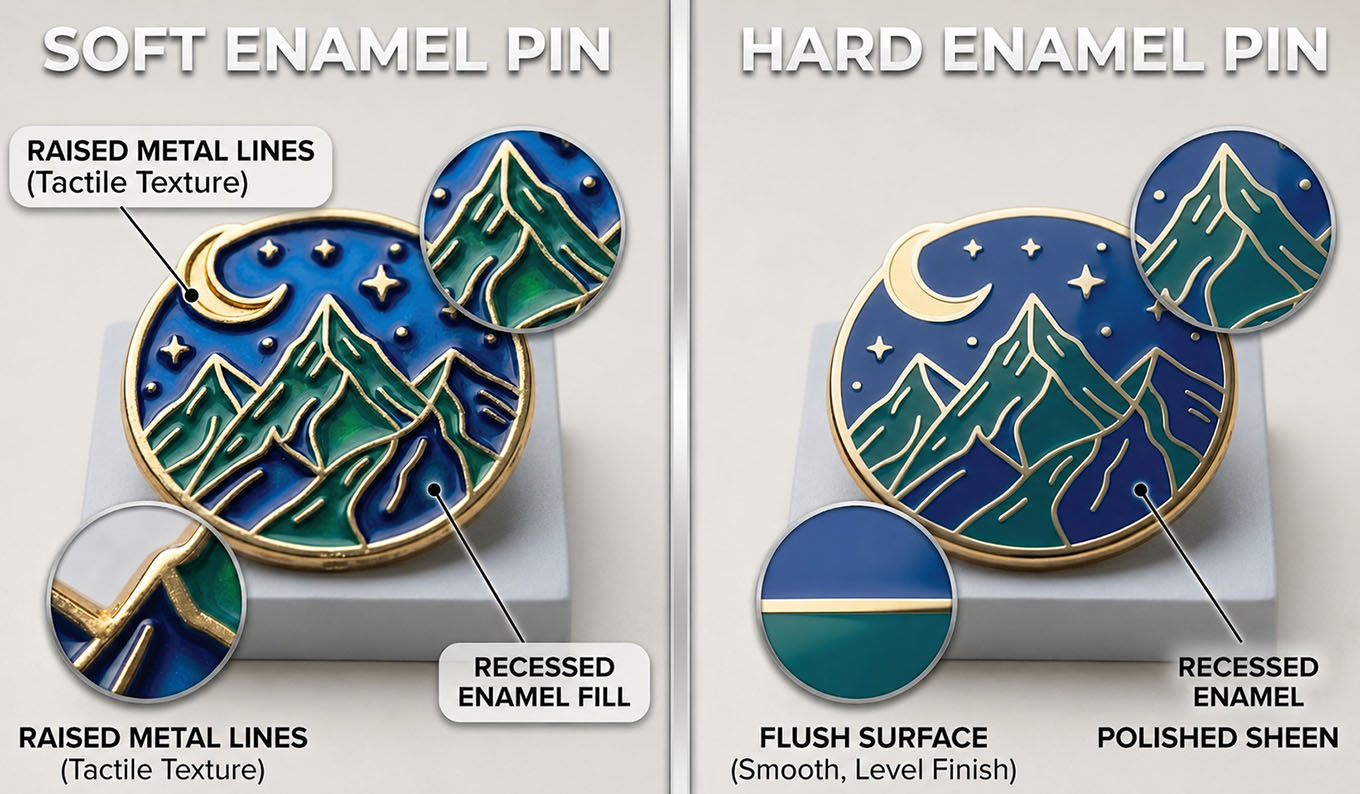
Custom Soft enamel pins have raised metal outlines with recessed enamel areas, creating a slightly textured surface. This texture gives the design more contrast and can make bold artwork feel more dimensional.
Because enamel flows into recessed areas during production, extremely thin or tightly packed details may lose clarity. This is due to material behavior during filling rather than design error. For this reason, soft enamel is often a strong choice for bold artwork, textured designs, event giveaways, and cost-sensitive series.
Hard Enamel Pin
Custom Hard enamel pins go through a polishing process after enamel filling, which creates a smooth, flat surface where metal and enamel are level. This gives the product a more refined and premium appearance, which is why hard enamel is often used for retail products, official merchandise, and collector-focused designs.
However, hard enamel also has constraints. It is generally more expensive to produce and less suitable for designs that rely on strong surface texture or highly expressive visual variation. The polishing process also adds finishing time, so it may not be the best option for every project.
How to Choose Between Soft Enamel and Hard Enamel
In practice, the choice between soft enamel and hard enamel is not about which one is better. It depends on the design intention and production goal. Soft enamel is usually a good choice when the artwork needs visible texture, stronger contrast, or a more cost-efficient structure. Hard enamel is often better when the brand wants a smoother surface, a polished retail look, or a premium collector product.
5. Design Constraints in Production
When designing custom enamel pins, artwork must be adjusted for the physical production process. A good pin design is not always the most detailed design; it is the design that keeps its identity clearly after stamping, enamel filling, polishing, and plating.
Line Thickness and Stability
Line thickness directly affects whether a design can survive production. If lines are too thin, they may merge during enamel filling, lose clarity after polishing, or break during stamping.
In real production, designs are often simplified to preserve clarity rather than detail density. The goal is not to remove personality from the artwork, but to make sure the most important visual elements remain readable at the final pin size.
Visual Separation and Readability
Enamel pins rely on clear separation between color areas. Even visually strong artwork may lose readability if compartments are too small or too dense when translated into physical form.
This is why color planning matters. Each enamel color needs enough space to sit cleanly inside its metal border. When too many colors or small areas are packed together, the finished pin can look crowded even if the digital artwork looks attractive.
Small Text and Tiny Details
Small text is one of the most common problems in enamel pin design. Text that looks readable on screen may become too small after the design is reduced to pin size. For enamel pins, short words, bold lettering, and simplified symbols usually work better than long sentences or fine typography.
This is especially important for character names, slogans, event dates, or logo details. If the text is important, it may be better to move some information to the backing card instead of forcing everything onto the pin itself.
Pin Size Affects Detail
The smaller the pin, the more the artwork needs to be simplified. A design with many colors, small facial details, or thin decorative lines may work better at a larger size, while a small pin usually needs stronger shapes and fewer details.
Before production, it is useful to review the artwork at actual size. This helps buyers see whether the design still looks clear when reduced from screen view to real product scale.
6. Surface Finishes and Hardware Experience
Surface finishing affects how enamel pins are perceived visually and emotionally. Plating is not only a technical choice; it changes the mood of the product.
Gold plating usually gives a more classic or premium impression, while black nickel can make a design feel more modern, bold, or suitable for darker themes. Antique finishes are often used when a brand wants a vintage or collectible feeling, especially for museum, heritage, or retro-style designs.
Additional effects such as glow or glitter are often used to reinforce specific themes. Glow-in-the-dark enamel works well for Halloween, fantasy, night, or mystery themes, while glitter enamel can add a playful or decorative effect to cute, holiday, or magical designs.
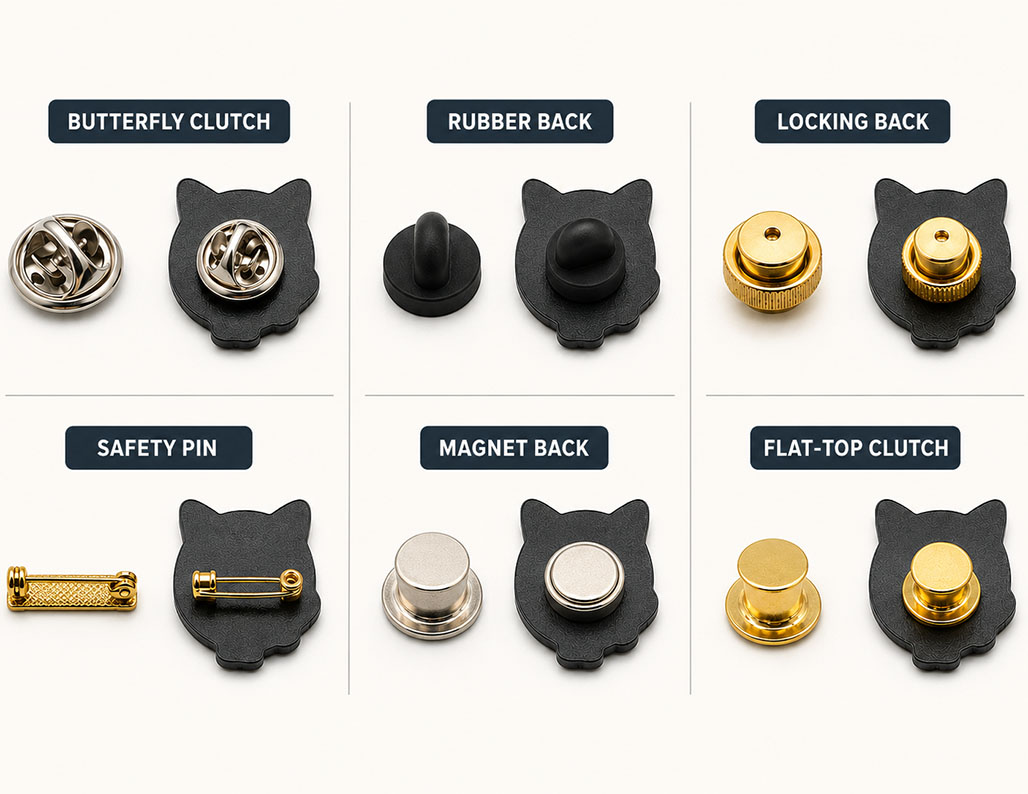
Hardware also impacts user experience. Locking backs improve security for heavier or premium pins, butterfly clutches are widely used for standard applications, and magnet backs shift the product toward display use rather than wearable use. These details may seem small, but they affect how the final product is used, packed, and perceived.
7. How Enamel Pins Are Used in Merch Systems
Enamel pins are rarely standalone products. They are usually part of a structured merchandising system that may include drops, bundles, retail displays, or character-based collections.
Merch Drops
Pins are often released as part of campaign-based drops, sometimes individually and sometimes bundled with other products such as stickers, keychains, acrylic standees, lanyards, or gift boxes.
Series-Based Collections
Series-based collections are common in IP merchandising. Pins are designed as interconnected pieces within a system, often representing characters, themes, story elements, or seasonal variations.
Fandom and Community Products
In fandom environments, enamel pins act as shared visual language between users. They help fans express connection to characters or stories in a physical and wearable form.
8. How to Plan an Enamel Pin Collection
A successful enamel pin collection is not created only by designing multiple pins. It requires planning how the series will be grouped, released, packaged, and managed.
The first step is to define the theme. This may be based on a character universe, a holiday campaign, an event, a brand story, or a visual concept. A clear theme helps every pin feel connected even when each design is different.
The second step is to decide how many designs should be included. A small test series may include 3 designs, while a more complete IP or seasonal collection may include 6, 9, or more. The number should match both the story and the sales channel.
The third step is to plan the release method. Some brands launch the full set at once, while others release designs gradually as seasonal drops or limited editions. Mystery-style or blind-box style releases can also work when the audience enjoys collecting and discovery.
Packaging should also be planned early. Individual packaging gives each design retail flexibility, while set packaging can make the collection feel more complete. Backing cards can connect the designs visually by using the same logo, color system, numbering, or series name.
Finally, SKU management becomes important when a collection includes multiple designs. Each design should have clear labeling, packing details, and quantity tracking so that products are not mixed during packing, shipping, or retail distribution.
9. FAQ
What is an enamel pin used for?
Enamel pins are used for branding, fandom, events, retail merchandise, and collectible products. They help turn visual identity into a physical object that people can wear, display, save, or collect.
What is the difference between soft and hard enamel pins?
Soft enamel pins have a textured surface due to recessed enamel areas, while hard enamel pins are polished flat for a smooth finish. Soft enamel often works well for bold and textured designs, while hard enamel is often chosen for a cleaner and more premium retail look.
How much do custom enamel pins cost?
The cost depends on size, design complexity, plating, color count, quantity, and packaging. Simpler designs are generally more cost-efficient, while larger sizes, multiple colors, special finishes, or individual packaging can increase the price.
What affects enamel pin price?
Key price factors include design complexity, number of colors, pin size, thickness, plating type, special effects, order quantity, and packaging method. A multi-design series may also require extra planning for SKU labeling and packing.
Are custom enamel pins good for merchandise?
Yes. Custom enamel pins are widely used in IP merchandising because they are flexible, collectible, and easy to build into series-based product systems. They work well for fan products, retail collections, event merchandise, and seasonal campaigns.
What is the MOQ for enamel pins?
MOQ typically starts around 100 pieces per design, depending on the production method and design complexity. For multi-design collections, the MOQ may need to be planned by style or SKU.
How long does production take?
Most enamel pin projects take a few weeks from sampling to mass production, depending on design complexity, quantity, finishing requirements, and packaging. Projects with special effects or multiple designs usually need more planning time.
Can custom enamel pins be packaged with backing cards?
Yes. Backing cards are commonly used for retail enamel pins because they make the product easier to display, protect the pin, and help communicate the brand, character name, series name, barcode, or social media information.
What file format is best for enamel pin artwork?
Vector files such as AI, EPS, or PDF are usually preferred because they make it easier to check outlines, color areas, and metal borders before production. If only PNG or JPG artwork is available, the design may need to be redrawn or adjusted before sampling.
10. Choosing the Right Custom Enamel Pin Solution
Custom enamel pins are widely used in branding, IP merchandising, and fandom culture because they combine visual identity, production flexibility, and collectible behavior.
Their value comes not only from visual design, but from how they are structured within a larger system that includes identity expression, series logic, production constraints, packaging, and release planning.
When designed properly, custom enamel pins become more than accessories. They become part of how brands build long-term engagement through physical objects.