Custom Metal Keychains Manufacturer Guide
What Are Custom Metal Keychains?
Most custom metal keychains use zinc alloy, iron, brass, or stainless steel. Manufacturers can produce them through die casting, stamping, etching, and enamel filling. They can also add UV printing, plating, polishing, and custom assembly to create different finishes and styles. This makes metal keychains ideal for promotions, retail items, and branded gifts.
Metal keychains are a favorite for brands, corporate gifts, events, tourism projects, and licensed merchandise teams. Their solid feel, durability, and premium look make them stand out from lighter promotional items. Many brands and merchandise teams use metal keychains for promotions, corporate gifts, souvenirs, and event giveaways. For character merchandise or limited-edition products, metal keychains also work well because they feel durable and collectible.
A successful metal keychain project is not only about choosing a shape and asking for the lowest price. Before tooling, buyers should carefully consider factors such as production method, material, enamel type, plating finish, attachment structure, packaging, and quality standards.
Why Choose Metal Keychains Instead of Acrylic or PVC?
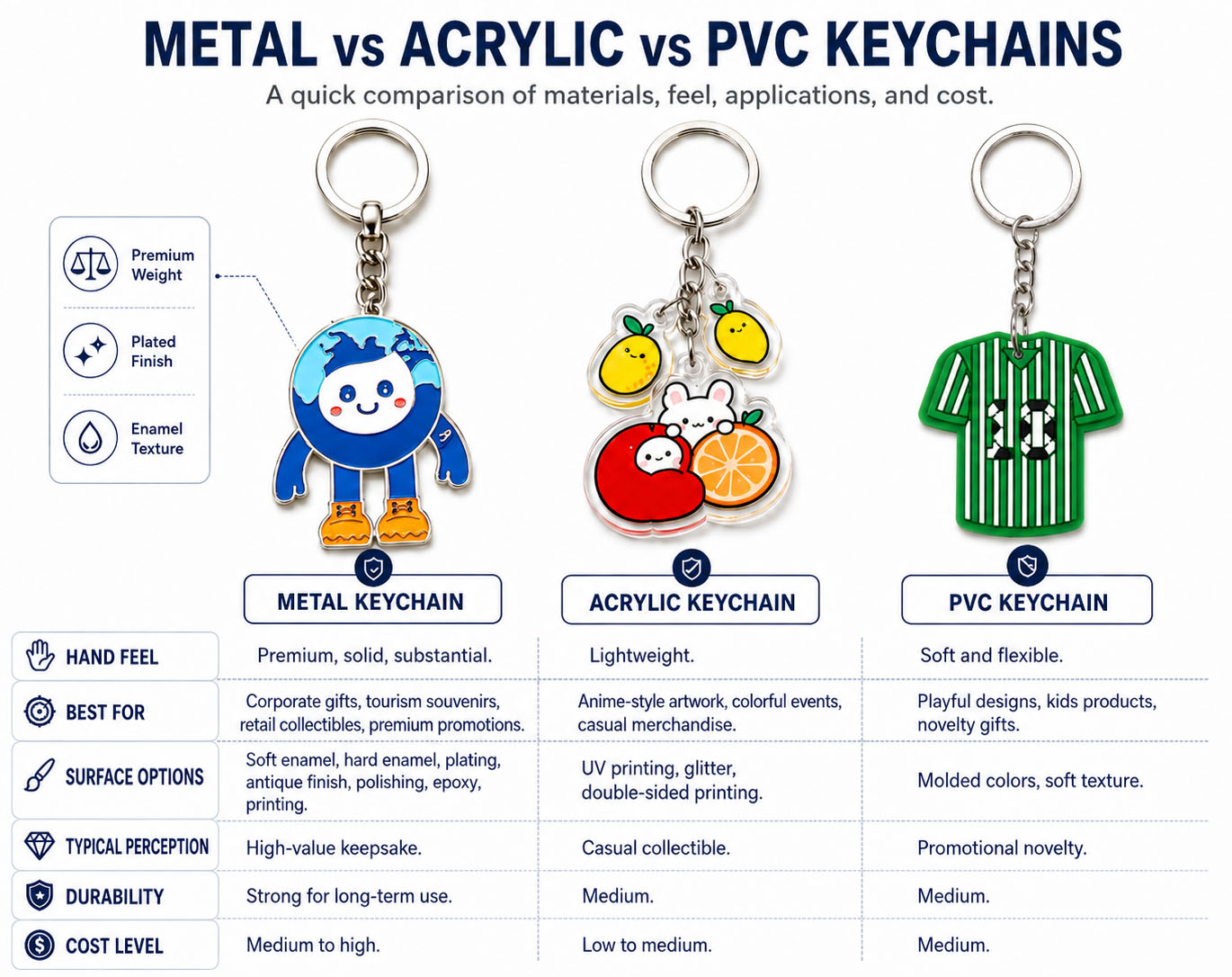
Acrylic and PVC keychains are useful for colorful, lightweight, or playful designs. Metal keychains are a better choice for projects that require a solid feel. They also provide a premium finish, long-lasting durability, and higher perceived gift value.
Metal keychains work well for retail sales, premium gifts, tourist souvenirs, and corporate branding. Their solid feel and long product life also help customers remember a brand for a longer time.
How Custom Metal Keychains Are Manufactured
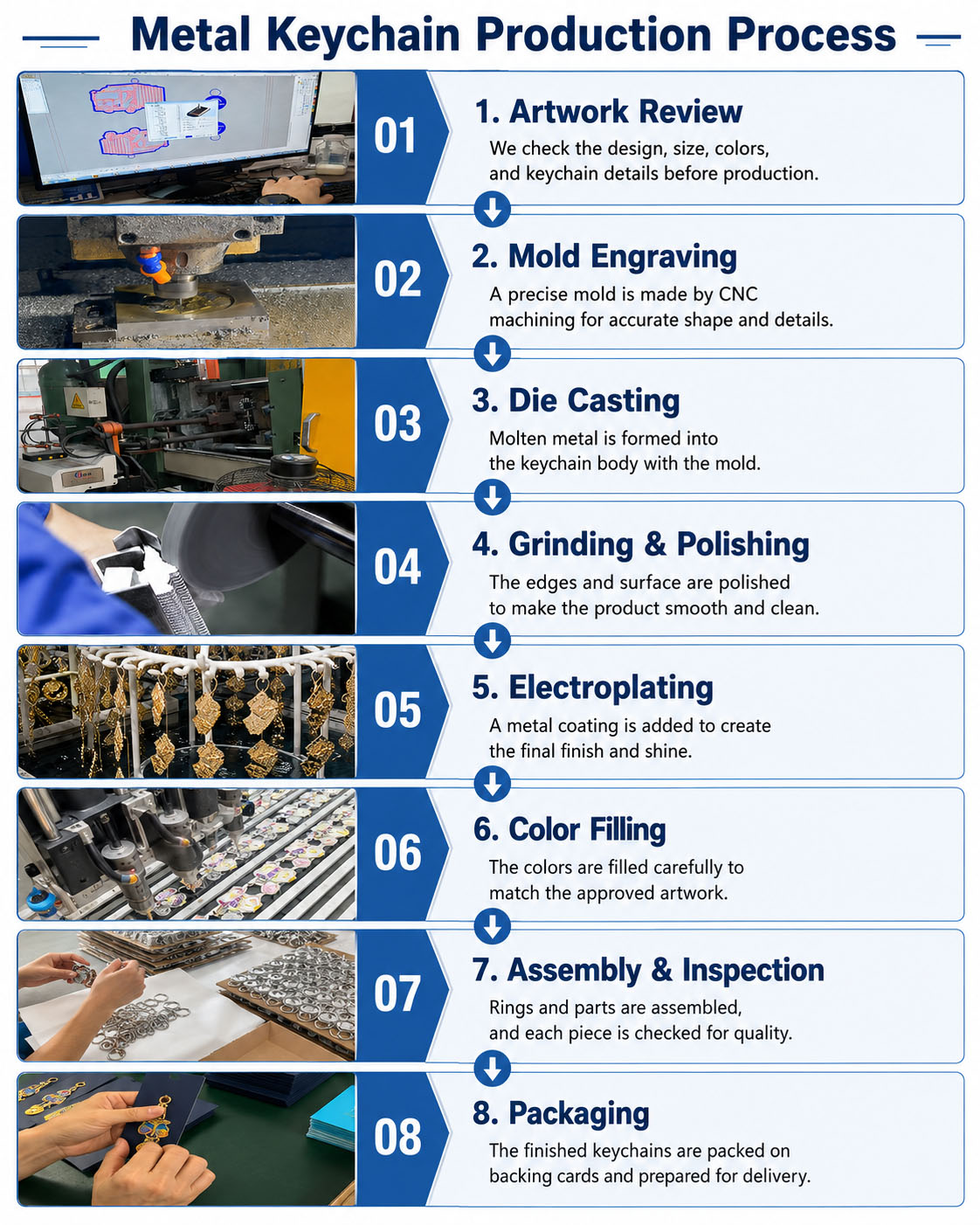
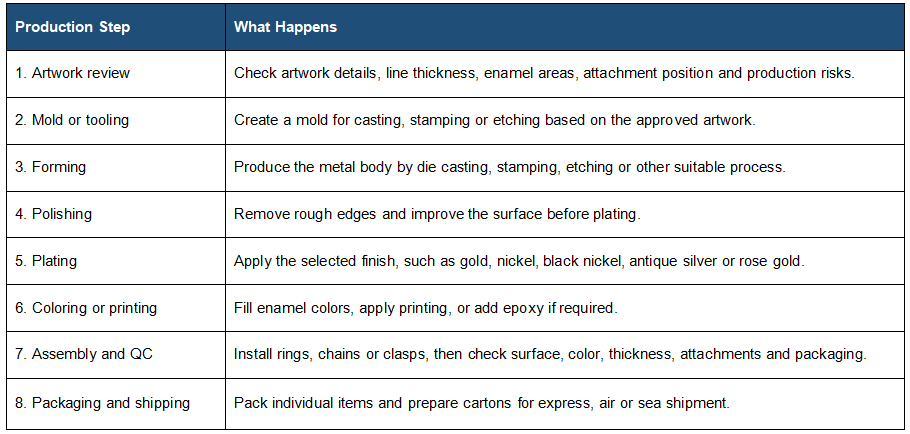
A professional metal keychain project starts with a manufacturability review. Before production, we review your artwork, product specifications, packaging needs, order quantity, target budget, and final use. This helps us confirm the correct production method and enamel areas. We also check plating finish, thickness, and attachment structure before sampling or tooling begins.
In a typical production process, we first review the artwork and create molds. The key steps include casting or stamping, polishing, plating, enamel filling or printing, quality checks, packaging, and international shipping. The exact process depends on the design and the production method selected.
Choosing the Right Production Method
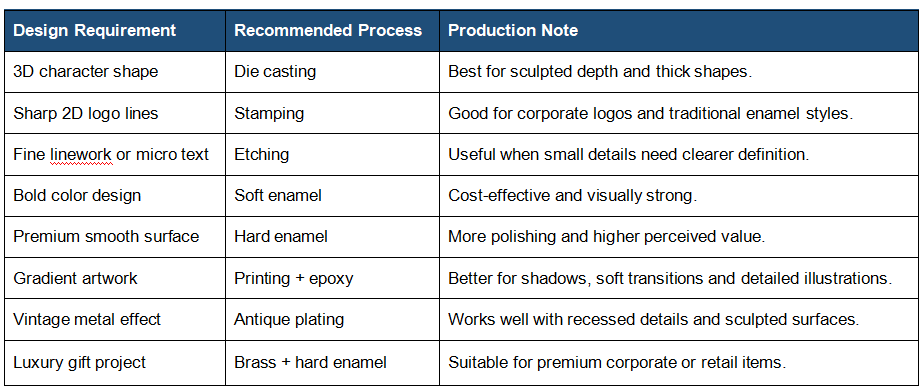
Different artwork styles require different production methods. The wrong production method can affect both appearance and durability. It may lead to unclear details, weak structures, poor enamel results, plating issues, or extra tooling revisions. Buyers should choose the right process based on the design, not just the lowest unit price.
Die Casting: Best for 3D and Complex Shapes
Die casting is commonly used for zinc alloy keychains with sculpted shapes, thicker bodies, 3D details, and complex outlines. This process is suitable for character keychains, dimensional logos, antique plating effects, and larger promotional or retail pieces. However, polishing may soften ultra-fine lines or micro text, so we always review the artwork before tooling begins.
Stamping: Best for Sharp 2D Logo Designs
Stamping works well for flat 2D designs, badge-style keychains, corporate logos, and enamel keychains. It can provide clean metal lines and accurate enamel areas when the artwork is suitable for this process.
Etching: Best for Fine Details and Thin Lines
Etching is useful for intricate linework, micro text, vintage-style patterns, and lightweight metal keychains. Etching helps show fine details more clearly than some casting methods. However, etched keychains are usually thinner and may not feel as heavy or premium as die-cast or stamped pieces.
Printing + Epoxy: Best for Gradients and Detailed Artwork
Traditional enamel works best with solid colors. For artwork with gradients, shadows, detailed character expressions, or photographic effects, epoxy-coated printing is often the best choice. This helps preserve more artwork detail while still giving the keychain a finished surface.
Soft Enamel vs Hard Enamel Keychains
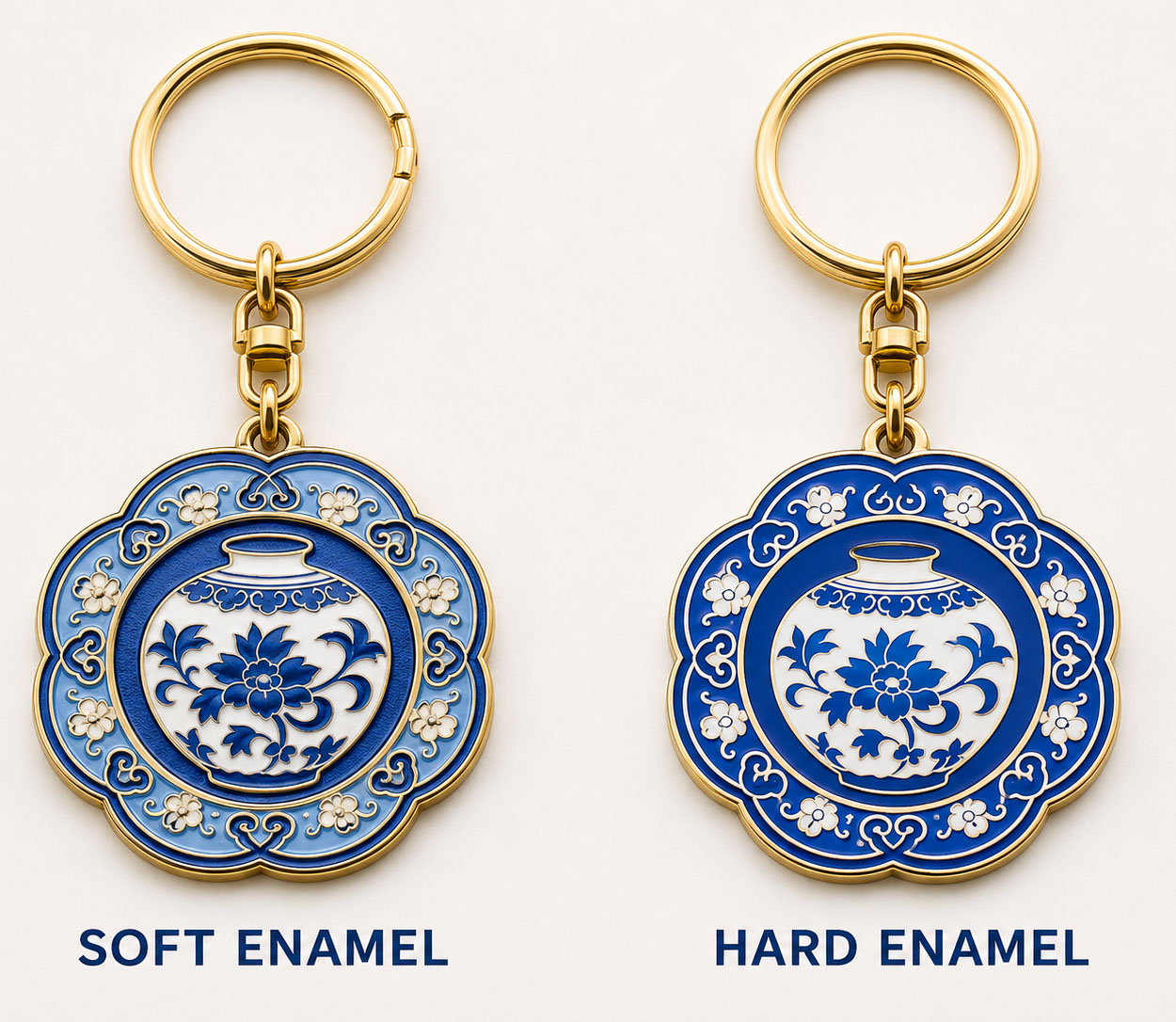
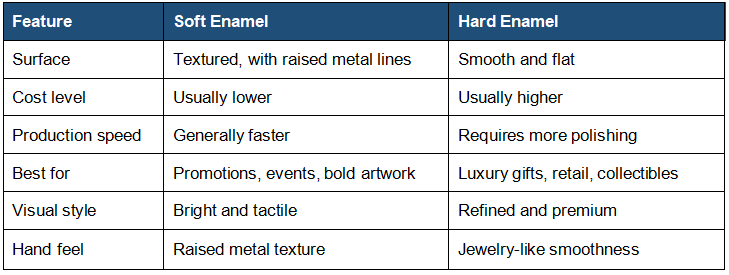
Soft enamel and hard enamel are two common finishes for custom metal keychains. The best choice depends on budget, artwork style, product positioning, and target audience.
Soft Enamel Keychains
Soft enamel keychains have raised metal lines with recessed color areas. The surface has a tactile texture, and the color contrast is strong. Soft enamel is usually suitable for promotions, events, bold character designs, colorful logos, and larger-volume orders.
Hard Enamel Keychains
Hard enamel keychains are polished until the enamel and metal surface are level. The result is smooth, refined, and closer to a jewelry-like finish. Brands often choose hard enamel for premium gifts, retail merchandise, award keychains, anniversary products, and higher-end collectibles.
Plating and Attachment Options
Hard enamel keychains are polished until the enamel and metal surface are level. The result is smooth, refined, and closer to a jewelry-like finish. Brands often choose hard enamel for premium gifts, retail merchandise, award keychains, anniversary products, and higher-end collectibles.
Common Plating Options
We offer a range of finishes, such as gold, silver, nickel, black nickel, and rose gold. We also offer antique gold, antique silver, antique bronze, matte, rainbow, and dual-tone plating. Standard plating is usually more cost-effective. Special or dual-tone finishes often cost more and take longer to produce.
Common Attachment Options
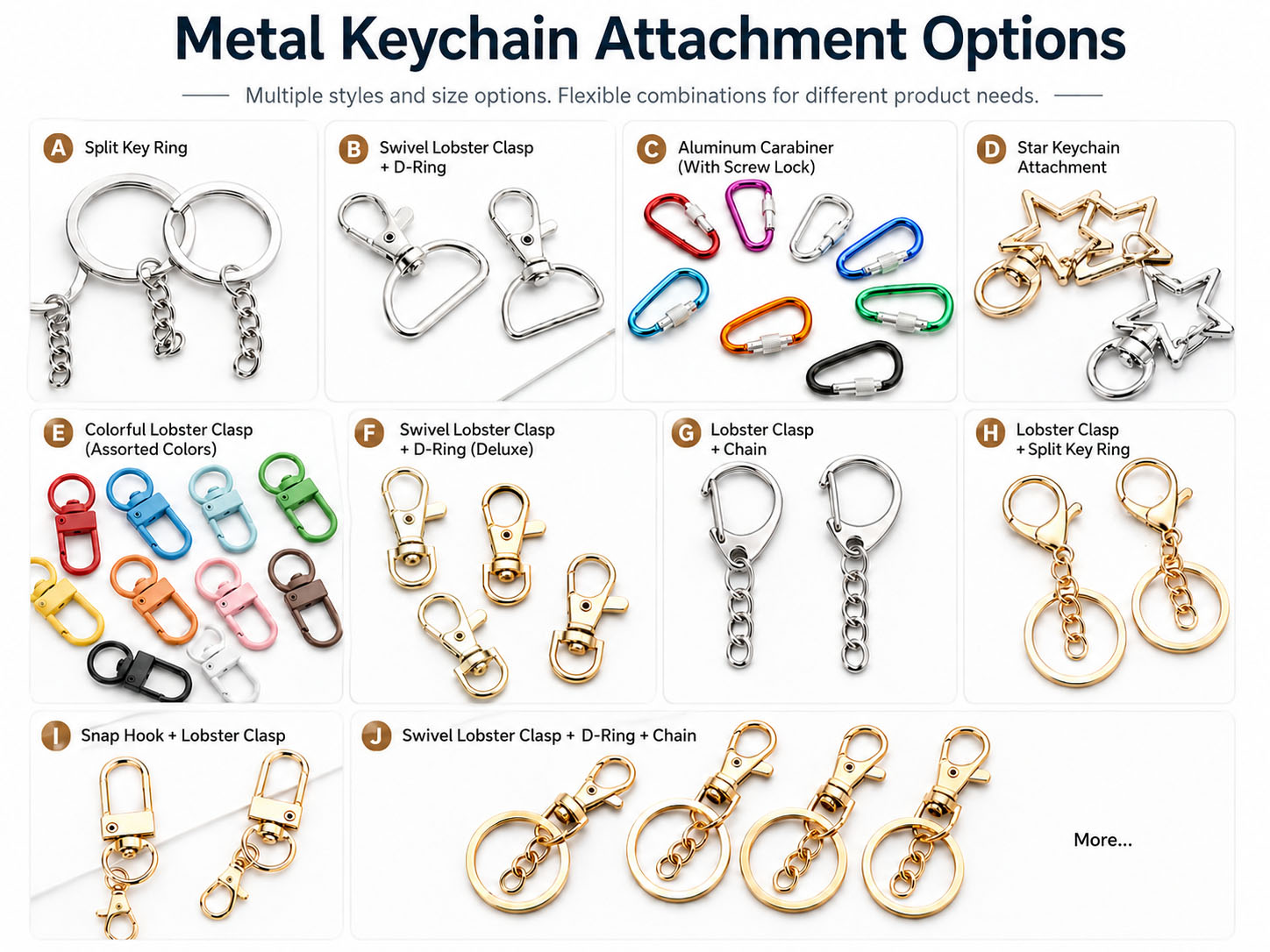
Common attachment options include split rings, jump rings, chains, lobster clasps, swivel clasps, carabiners, leather straps, and custom connectors. Some keychains also use multiple charms. For daily-use keychains, attachment strength is especially important. Weak jump rings, thin connector areas, or poorly placed holes can weaken the whole keychain, even when the main metal body is well made.
Common Artwork Problems We Fix Before Tooling
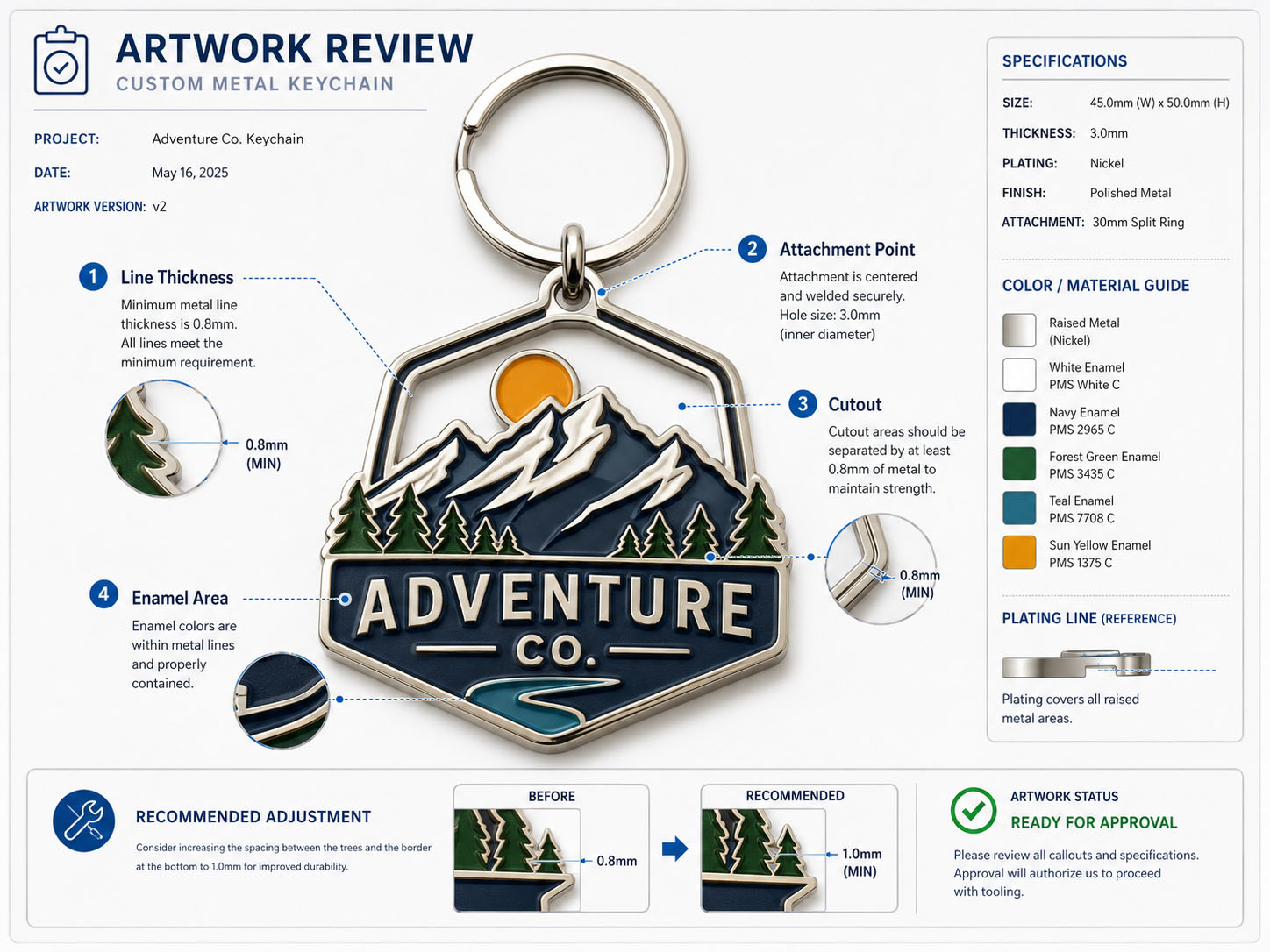
Many production issues can be prevented before the mold is made. A design may look good on screen, but it still needs to work in real production. It must hold up through metal forming, polishing, plating, enamel filling, attachment assembly, and daily use.
Lines That Are Too Thin
Ultra-thin lines may disappear during casting, stamping or polishing. We review line thickness and may suggest widening important details before tooling.
Cutouts That Are Too Narrow
Small interior cutouts may weaken the structure or make mold release difficult. We may adjust the cutout shape while keeping the visual concept close to the original artwork.
Weak Attachment Points
The key ring hole, connector section or hanging point must be strong enough for daily use. If this area is too thin, the keychain’s durability may be compromised.
Text That Is Too Small
Tiny letters may become unreadable after polishing, plating or enamel filling. We check whether the text should be enlarged, simplified, or converted to printing.
Gradients Used in Enamel Areas
Traditional enamel cannot reproduce soft shadows or complex gradients. For gradient artwork, printing with epoxy coating is often a better solution.
Product Too Thin or Unbalanced
Extremely thin or overly large metal pieces may deform and feel less premium. Designers and manufacturers should review thickness, material, and attachment position together before production.
Custom Metal Keychain Pricing Factors
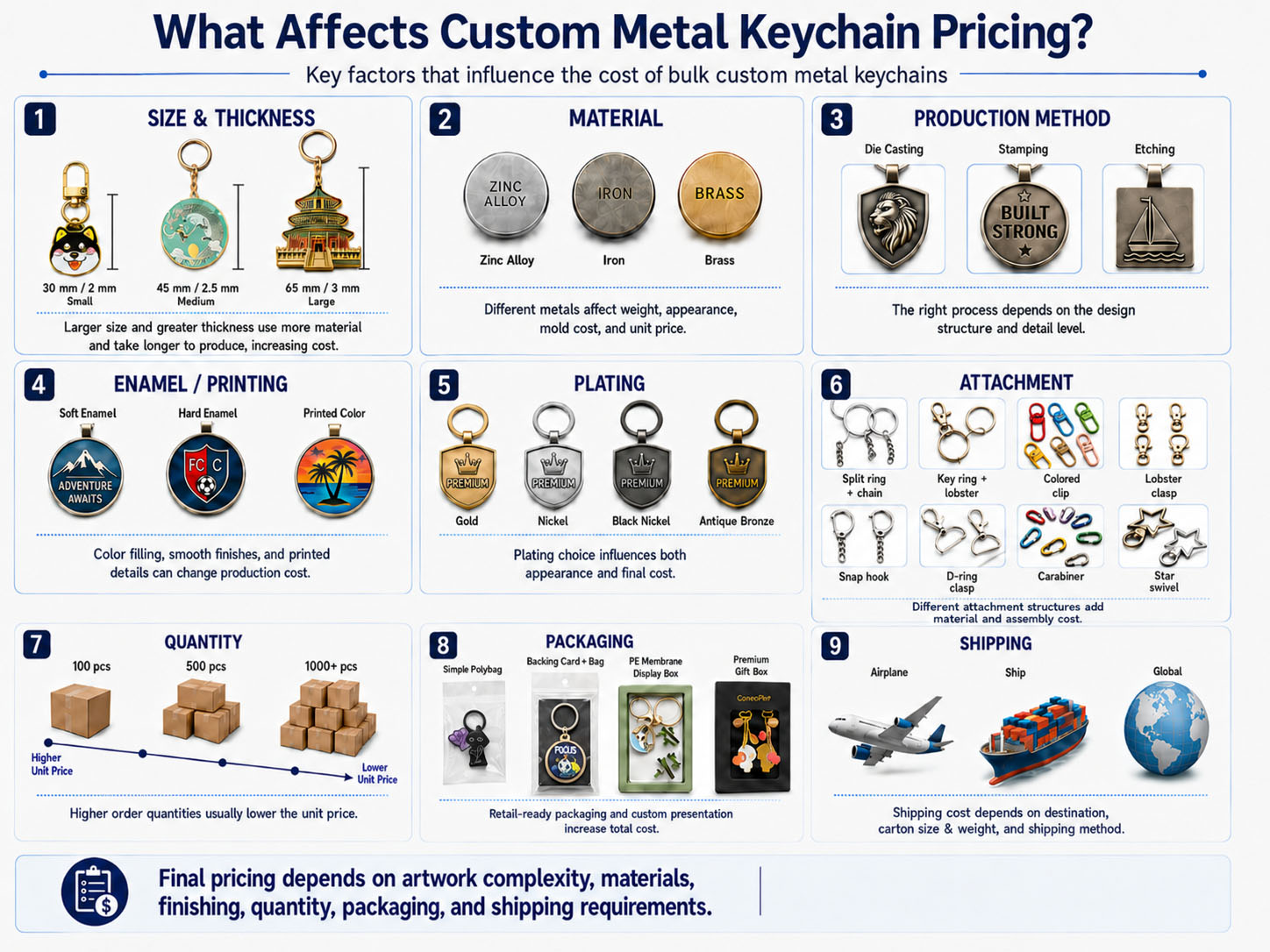
Custom metal keychain pricing depends on more than size. Buyers should note that material, production method, and enamel type affect the final cost. Plating finish, attachment, quantity, packaging, and shipping requirements also contribute to the overall cost. Always treat any price range as a reference, since every custom design is unique.
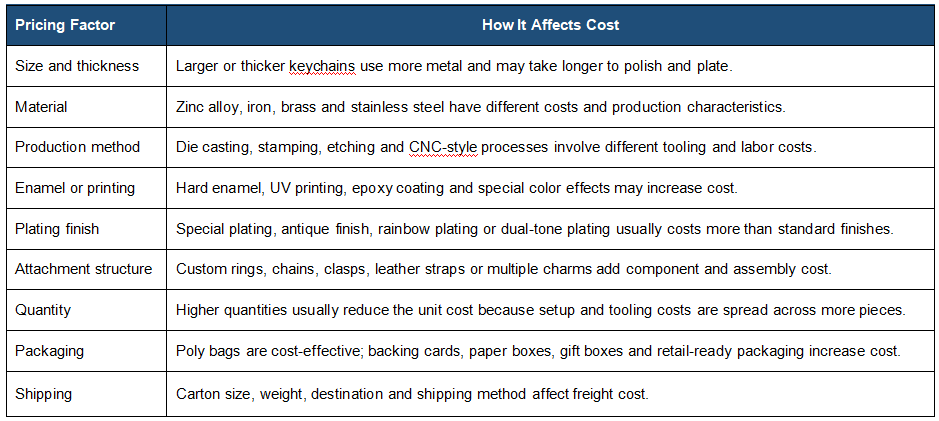
To get an accurate price, send your artwork and target size. Include quantity, material choice, finish, and attachment type. Add packaging needs and delivery country.
If you are unsure which process fits your design, we can review your design before sampling or tooling. This helps avoid unnecessary tooling changes and extra costs.
Quality Control and Packaging
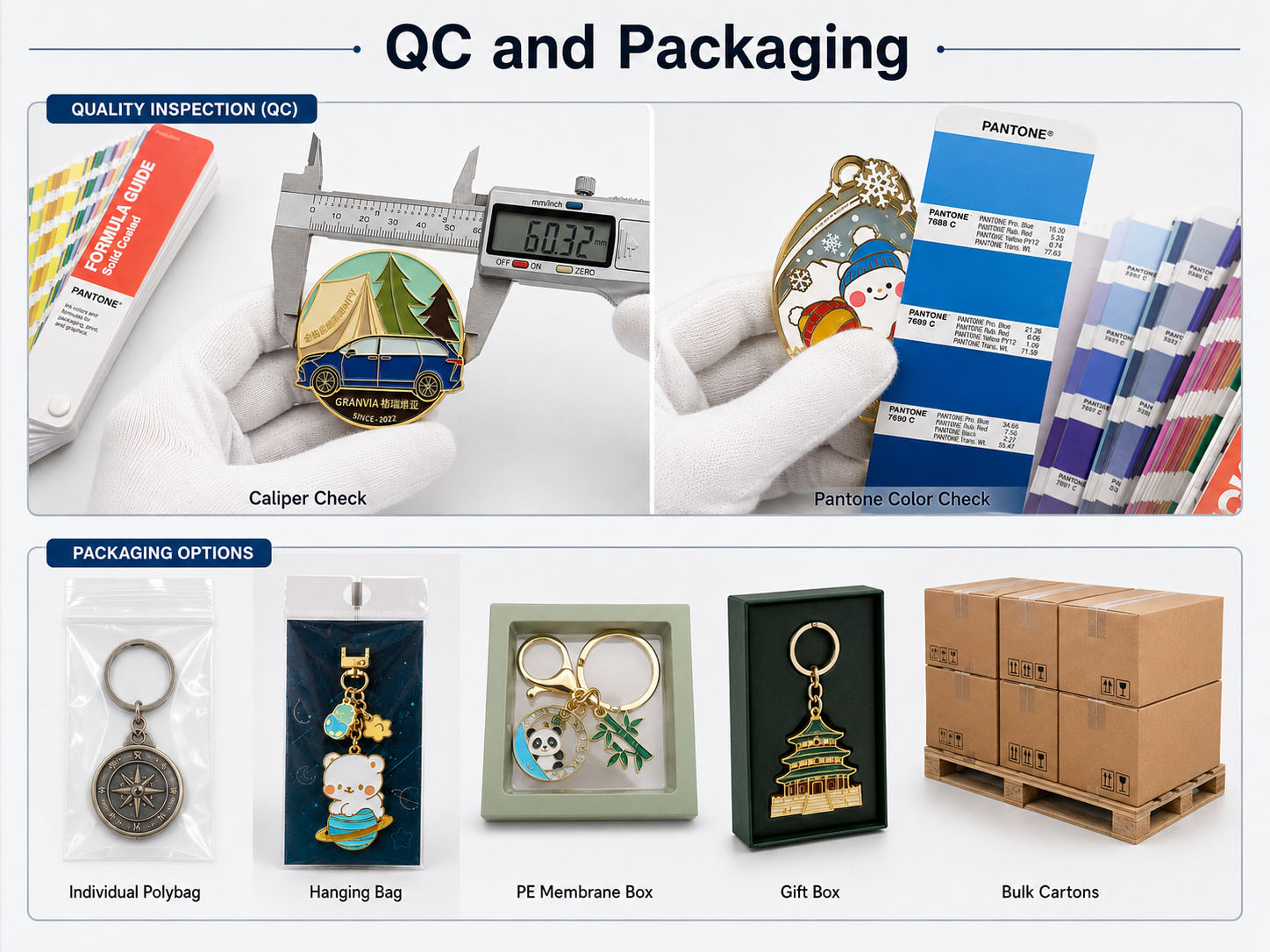
For bulk orders, consistent quality across the full batch is as important as making one good sample. During production and before shipment, we check the key specifications, including size, thickness, and plating consistency. We also inspect surface quality, such as scratches, enamel overflow or underfill, and printing clarity. Finally, we check ring and chain strength, attachment durability, packaging condition, and final quantity.
Packaging should match the purpose of the order. For event giveaways, individual poly bags are a practical packaging option. For retail items, tourism souvenirs, and corporate gifts, buyers often choose backing cards or velvet pouches. For higher-end products, paper boxes or gift boxes create a more premium presentation.
FAQ: Custom Metal Keychains
What is the MOQ for custom metal keychains?
Our standard MOQ is usually 100 pieces, depending on design, material, process, packaging and current production schedule. Smaller sample orders may be possible for certain projects.
How long does production take?
Sample production usually takes several business days after artwork confirmation. Mass production time depends on quantity, process, plating, packaging and order complexity.
What artwork file format do I need?
We prefer AI, EPS, PDF, or SVG files for artwork review. You can also send PNG, JPG, sketches, or reference images. However, vector files help us prepare more accurate tooling and production files.
Can you help optimize my existing design?
Yes. Before tooling begins, we review the key production details in your artwork. We check thin lines, cutouts, attachment points, enamel areas, text size, and plating choice. We also identify other potential production risks.
What is the difference between die casting and stamping?
Die casting is better for 3D shapes, sculpted details and thick designs. Stamping is better for flat 2D designs, logo keychains and traditional enamel styles.
Can you make metal keychains with multiple charms?
Yes. We can make metal keychains with multiple charms, chains, split rings, lobster clasps, carabiners, or custom connectors. Buyers often choose this for character merchandise, retail gift sets, tourism souvenirs, and premium promotional products.
Can you provide retail-ready packaging?
Yes. We offer a variety of packaging options, including individual poly bags, printed hanging bags, and backing cards. For retail, corporate gifts, or premium products, we also provide PE membrane boxes, paper boxes, and gift boxes. Barcode labels and retail-ready cartons are available for larger orders.
Can you ship bulk orders worldwide?
Yes. We ship orders via express courier, air freight, or sea freight. For larger quantities, tight deadlines, or international destinations, we can provide door-to-door logistics.
Start Your Custom Metal Keychain Project
The fastest way to get an accurate quote is to send your artwork or idea together with basic project details. If you are unsure which material or process works best, we can review your design. We also evaluate enamel type and attachment to suggest the most suitable production method before tooling. This helps us recommend a suitable production solution.
Please include:
· Artwork, logo or reference image
· Preferred size and quantity
· Material or finish preference, if any
· Soft enamel, hard enamel, printing or epoxy requirement
· Plating color or antique finish preference
· Attachment type, such as split ring, chain, lobster clasp, carabiner, or custom fitting
· Packaging requirement
· Delivery country and deadline
· Target budget, if available
At imusetec, we help brands, agencies, creators, and corporate buyers develop custom metal keychains for different projects.
You may need keychains for simple branding or premium gifts. You might also want 3D die-cast souvenirs or full retail-ready merchandise sets. We can help you choose the right production process from the beginning.